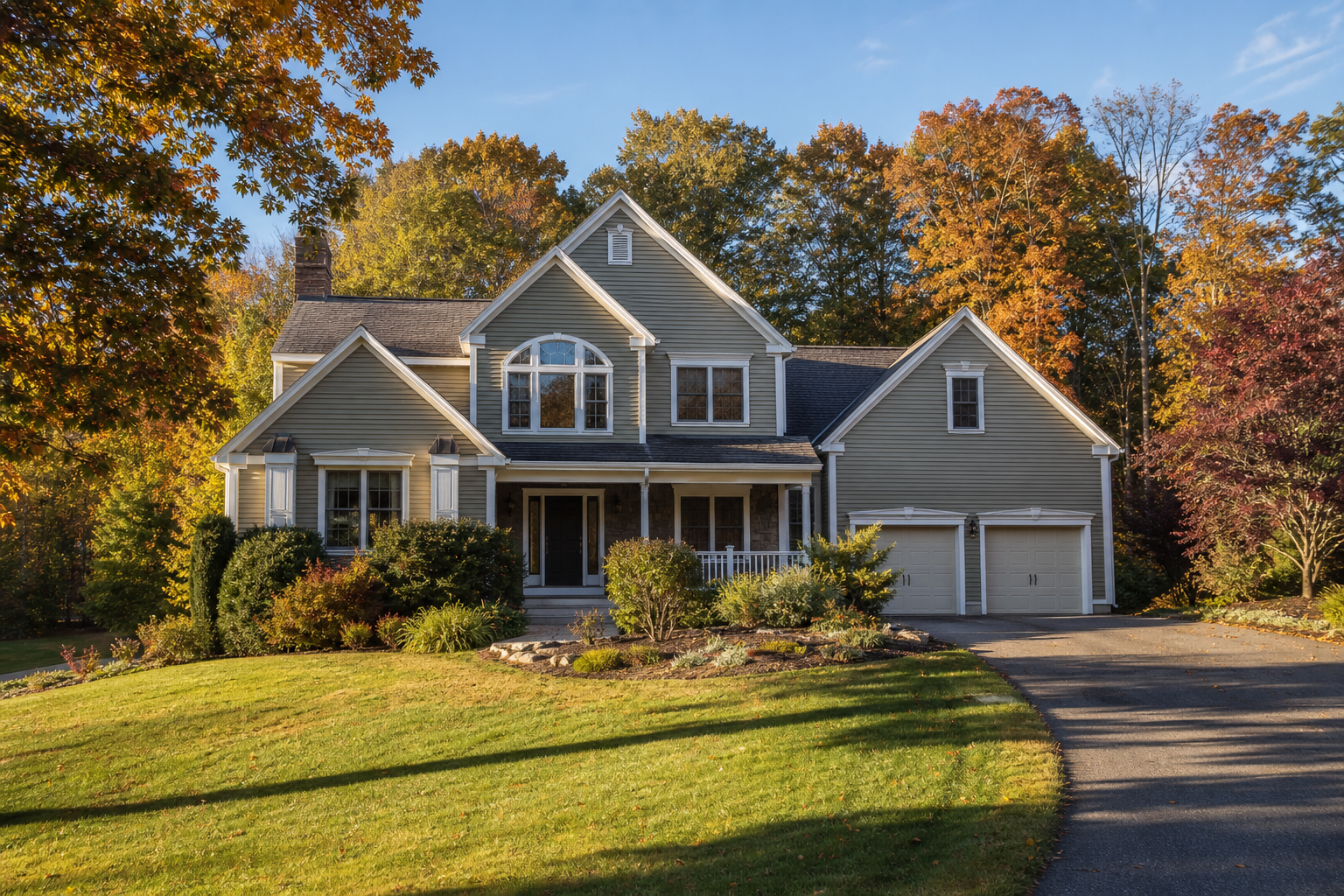
Should you renovate before selling in North Central CT or Western Mass?
By Lori Gabriel
In most cases, targeted cosmetic updates, fresh paint, refinished floors, a cleaned-up kitchen, improve your sale-to-list ratio and reduce days on market. But full renovations rarely return dollar-for-dollar in Hartford County or Hampden County. The smarter move is knowing which updates your specific price point actually rewards, and which ones you'll fund for the next buyer's benefit.
I walk my sellers through this question on almost every listing conversation. The answer is almost never "renovate everything" or "sell it as a total teardown." It's somewhere in the middle, and the data from this market tells you where that line is.
What the Market Data Actually Says Right Now
Before you swing a hammer, look at what's happening at the price points in your area. Recent Zillow market data (trailing 90 days, as of August 2026) shows meaningful differences across the communities Team Gabriel serves:
| Area | Median Sale Price | Median Days on Market |
|---|---|---|
| East Windsor | $280,000 | 57 |
| New Britain | $325,000 | 50 |
| Suffield | $490,000 | 44 |
These are area-level medians. An individual home's value depends on condition, street, build year, and timing. But the pattern matters: homes in the $280,000–$325,000 range are sitting longer than homes at the $490,000 level. That tells you buyers at lower price points have more options or more hesitation, which means condition and presentation carry more weight at those entry-level price points.
East Windsor's 57-day median is worth paying attention to. That's not a market where you can price aggressively on an unrenovated home and expect a quick offer. In Suffield, tighter inventory and a higher price point mean buyers expect more, but they're also moving faster when they find the right property.
On the Massachusetts side, National Association of Realtors research consistently shows that homes in the $250,000–$400,000 range, the sweet spot for much of Springfield, Agawam, and Longmeadow, are most sensitive to condition because buyers at that price point are often stretching their budget and don't have renovation reserves. A move-in-ready home competes differently than a "priced for updates" listing when buyers are already at their ceiling.
What "As-Is" Actually Means in This Market
Listing as-is doesn't mean hiding problems. In Connecticut, sellers are required to complete a Residential Property Condition Disclosure Report under Connecticut General Statutes. You disclose known material defects. An as-is listing simply signals that you're pricing the condition into the number rather than fixing it first. Buyers know what they're getting. Some buyers, particularly investors and experienced renovators, specifically seek these listings.
The practical question is whether the discount you take by listing as-is is larger or smaller than what you'd spend to renovate. That math is different for every property, which is why I don't give sellers a universal answer. I run the numbers specific to their home, their neighborhood, and where buyers in that price range are setting their expectations right now.
For a deeper look at what selling costs look like in this region, the post on cost to sell a house in North Central CT walks through the categories you'll want to account for before you decide how much to put into pre-sale work.
The CT vs. Western Mass Distinction
Hartford County and Hampden County share a border, similar price ranges, and a lot of the same buyer pool. But there are real differences in how buyers approach condition in each market.
Connecticut buyers in the $280,000–$400,000 range tend to be more sensitive to deferred maintenance because financing appraisals in CT can flag issues that complicate closing. If a home has a dated kitchen but everything is functional and clean, that's manageable. If there are visible systems issues (aging HVAC, old roof, moisture in the basement), those create appraisal and inspection friction that slows deals down regardless of price.
In Western Massachusetts, particularly in Springfield, Chicopee, and Agawam, Massachusetts Association of Realtors data has shown a consistently active market for value-priced homes in move-in condition. Buyers crossing from Connecticut into Western Mass are often doing so specifically for the lower price points, and they want to move in, not renovate. That shifts the calculus toward at least cosmetic updates before listing.
Which Updates Actually Move the Needle (and Which Don't)
NAR's Remodeling Impact Report is one of the most useful tools for sellers wrestling with this. It tracks the cost vs. recovered value for common pre-sale projects. The consistent findings across markets like ours:
High-return, low-cost updates (typically recover well):
- Interior paint in neutral tones
- Refinishing or deep-cleaning hardwood floors
- Landscaping cleanup and curb appeal improvements
- Fixture updates in kitchens and bathrooms (hardware, faucets, lighting)
- Deep cleaning and decluttering throughout
High-cost projects with variable recovery:
- Full kitchen remodel
- Primary bathroom gut renovation
- Basement finishing
- Room additions
A full kitchen remodel in Hartford County or Hampden County can run $30,000–$60,000 depending on scope. Remodeling Magazine's Cost vs. Value Report has historically shown mid-range kitchen remodels recovering roughly 60–80% of cost at resale nationally, with the recovery rate varying significantly by local market. In a $280,000 median market, spending $45,000 on a kitchen rarely makes sense. In a $490,000+ market like Suffield, it's a closer call, especially if competing listings have updated kitchens.
The practical rule I use with my sellers: update to compete, not to perfect. Your goal is to remove objections, not to create a showroom. If every other home at your price point has granite counters, you need granite counters. If buyers in your price range are fine with laminate, don't spend $15,000 upgrading it.
For context on current market conditions and whether timing your sale around updates makes sense, the post on good time to sell in North Central CT has current 2026 data worth reviewing before you make a final call.
The Pricing Trap Sellers Fall Into
Here's the scenario I see more than any other: a seller spends $25,000 updating a home, then prices it as if those updates added $40,000 in value. The market doesn't work that way. Buyers compare your home to other recently sold homes. If your renovated home is priced $30,000 above unrenovated comparable sales, buyers will wait for the next listing.
Pricing right from day one matters more than the updates themselves. A well-priced unrenovated home will often outperform an overpriced renovated one, because it generates early traffic and competitive interest. The updates only help if the price is calibrated to what buyers in this market are actually willing to pay.
If you're weighing what you'll actually net after updates and selling costs, the post on what you'll net selling in Western MA covers the cost categories you need to account for.
How to Make the Call for Your Specific Property
There's no universal answer here, but there is a framework that works for most sellers in this market.
Step 1: Get a current comparative market analysis (CMA). Before you spend a dollar, you need to know what your home is worth as-is and what comparable updated homes are selling for. The gap between those two numbers is your renovation budget ceiling.
Step 2: Get contractor estimates before committing. Sellers routinely underestimate renovation costs. Get real bids on the work you're considering before you decide it "pencils out."
Step 3: Consider your timeline. Renovations take time. If you're planning to list in the next 60–90 days, a full kitchen remodel isn't realistic. Cosmetic updates are. Factor in how long you can carry the property while work is being done.
Step 4: Think about your buyer pool. Investor buyers and flippers actively seek as-is listings and will offer accordingly. If your home needs significant work, there's a market for it, but you'll be pricing to that buyer, not to a retail buyer with financing contingencies. The CFPB's homeowner resources can help buyers you're working with understand their financing options for properties that need work.
Step 5: Run the actual math with an agent who knows your street. This is where a local market analysis is irreplaceable. I can tell you what updated homes on your specific street have sold for in the last six months, what as-is homes sold for, and whether the spread justifies the investment. That conversation takes 30 minutes and can save you tens of thousands of dollars in unnecessary renovation spend, or redirect you toward the one or two updates that actually move your sale price.
If your home has condition issues beyond cosmetics, like foundation concerns that might affect how you price and disclose, the post on selling with foundation issues in Hartford and Springfield is worth a read before you decide on your approach.
Frequently Asked Questions
Is it worth updating the kitchen before selling in Springfield, MA?
It depends on what comparable updated homes are selling for versus unrenovated ones in your specific price range. In the Springfield area, where many buyers are working within tight budgets, a clean, functional kitchen often matters more than a fully remodeled one. Minor updates like new hardware, fresh paint, and updated lighting frequently deliver better return than a full gut renovation. I'd run a CMA before committing to any kitchen spend.
Do updated homes sell faster in Hartford County, CT?
Generally yes, but the degree depends on price point and inventory. Recent market data shows homes in the East Windsor and New Britain range sitting 50–57 days on market at the median. Updated, move-in-ready homes at competitive prices tend to move faster within those ranges because buyers in the $280,000–$325,000 segment often don't have renovation reserves. That said, an overpriced updated home will still sit, so condition and pricing have to work together.
What's the ROI on a kitchen remodel before selling in Western Mass?
According to Remodeling Magazine's Cost vs. Value data, mid-range kitchen remodels nationally recover roughly 60–80% of their cost at resale, and that range tends to be on the lower end in mid-priced markets like Western Massachusetts. The ROI is better when your home is in a price tier where buyers expect updated kitchens and comparable sold homes have them. The only way to know whether it makes sense for your specific home is to compare your as-is value against updated comps on your street.
Should I sell as-is or renovate if my home needs a lot of work in Enfield or East Windsor?
If the work needed is significant (major systems, structural issues, extensive deferred maintenance), as-is is often the more practical path. You'll attract investor and renovation buyers who price in the work, and you avoid the carrying costs, timeline risk, and contractor uncertainty of a large pre-sale renovation. For homes that need cosmetic updates only, targeted improvements usually make more sense. A local market analysis will show you where the price gap actually sits between as-is and updated sales in your area.
How do I know which renovations will help my sale price in North Central Connecticut?
The most reliable method is comparing recent sold prices for updated versus unrenovated homes at your price point in your specific town. NAR's Remodeling Impact Report provides national benchmarks by project type, but local comparable sales are what actually matter. I pull those numbers for every seller I work with before we talk about pre-sale investment, because the answer is genuinely different in Suffield versus New Britain versus East Windsor.
The bottom line: in North Central Connecticut and Western Massachusetts, the best pre-sale strategy isn't about spending the most, it's about spending on what your specific market rewards. That takes local data, honest comparable analysis, and someone who knows both sides of the border.
If you're trying to figure out whether to update before listing, I'm happy to walk through the numbers with you. Schedule a consultation with Team Gabriel and we'll look at what updated homes in your area are actually selling for, what as-is homes are netting, and where the real opportunity is for your property.
Equal Housing Opportunity. Lori Gabriel is licensed with Team Gabriel at Coldwell Banker Realty, regulated by the Connecticut Real Estate Commission. This article is general information only, not legal, tax, or financial advice. Confirm your own numbers with your attorney, tax advisor, lender, or closing officer. By providing contact information, visitors consent to telemarketing and automated calls and texts from teamgabriel.net; message and data rates may apply.
