At Home with Team Gabriel

You’ll find our blog to be a wealth of information, covering everything from local market statistics and home values to community happenings. That’s because we care about the community and want to help you find your place in it. Please reach out if you have any questions at all. We’d love to talk with you!

Jan. 7, 2020

When a House Becomes a Happy Home

We talk a lot about why it makes financial sense to buy a home, but more often than not we’re drawn to the emotional reasons for homeownership.

No matter the size or shape of a living space, the feeling of a home means different things to different people. Whether it’s a certain scent or a favorite chair, the feel-good connections to our own homes are typically more important to us than the financial ones. Here are some of the reasons why:

1. Owning your home offers stability to start and raise a family

From the best neighborhoods to the top school districts, even those without children at the time of purchase may have this in the back of their minds as a major reason for choosing the location of the home they purchase.

2. There’s no place like home

Owning your own home offers not only safety and security, but also a comfortable place where you can simply relax and kick-back after a long day. Sometimes, that’s just what we need to feel re-charged and truly content.

3. You have more space for you and your family

Whether your family is expanding, an older family member is moving in, or you need to have a large backyard for your pets, you can take all this into consideration when buying your dream home, so the space truly works for you.

4. You have control over renovations, updates, and style

Looking to actually try one of those complicated wall treatments you saw on Pinterest? Tired of paying an additional pet deposit for your apartment building? Maybe you want to finally adopt that fur-baby puppy or kitten you’ve been hoping for. Who’s to say you can’t do all of these things in your own home?

Bottom Line

Whether you’re a first-time homebuyer or a move-up buyer who wants to start a new chapter in your life, now is a great time to reflect on the intangible factors that make a house a happy home.

Posted in Buyers
Jan. 6, 2020

Expert Insights on the 2020 Housing Market

When closing out another year, it’s normal to wonder what’s ahead for the housing market. Though there will be future inventory issues, we expect interest rates to stay low and appreciation to continue.  

Here’s what three experts are saying we’ll likely see in 2020:

Danielle Hale, Chief Economist at realtor.com

“I think the biggest surprise from the forecast is how long the market is staying
in this low inventory environment, especially as Millennials are in a major
home-buying phase…sellers will contend with flattening price growth and
slowing activity with existing home sales down 1.8%. Nationwide you can look
to flat home prices with an increase of less than 1%.”


Mike Fratantoni, Chief Economist at Mortgage Banker Association (MBA)

“Interest rates will, on average, remain lower…These lower rates will in turn
support both purchase and refinance origination volume in 2020.”


Skylar Olsen, Director of Economic Research at Zillow

“If current trends hold, then slower means healthier and smaller means more
affordable. Yes, we expect a slower market than we’ve become accustomed to
the last few years…consumers will continue to absorb available inventory and
the market will remain competitive in much of the country.”


As we can see, we’re still going to have a healthy market. It is forecasted to be a more moderate (or normal) market than the last few years, but strong enough for Americans to continue to believe in homeownership and to capitalize on the opportunities that come with low interest rates.

Bottom Line

If you’re wondering what’s happening in our local market, let’s get together today. Contact Team Gabriel at (860) 623-0883

Jan. 2, 2020

Why You Shouldn’t “For Sale By Owner”

Rising home prices coupled with the current inventory in today’s market may cause some homeowners to consider selling their homes on their own (known in the industry as a For Sale By Owner). However, a FSBO might be hard to execute well for the vast majority of sellers.

Here are the top 5 reasons not to FSBO:

1. Online Strategy for Prospective Purchasers

Studies have shown that 93% of buyers search online for a home. That’s a pretty staggering number! Most real estate agents have an Internet strategy to promote the sale of your home. Do you?

2. Results Come from the Internet

According to NAR, here’s where buyers found the homes they actually purchased:

  • 55% on the Internet
  • 28% from a Real Estate Agent
  • 10% Other
  • 6% from a Yard Sign
  • 1% from Newspapers

The days of selling your house by putting up a sign in your yard or placing an ad in the paper are long gone. Having a strong Internet strategy is crucial.

3. There Are Too Many People to Negotiate With

Here’s a list of some of the people with whom you must be prepared to negotiate if you decide to FSBO:

  • The buyer, who wants the best deal possible
  • The buyer’s agent, who solely represents the best interest of the buyer
  • The buyer’s attorney (in some parts of the country)
  • The home inspection companies, which work for the buyer and will almost always find some problems with the house
  • The appraiser, if there is a question of value

4. FSBOing Has Become Increasingly Difficult

The paperwork involved in buying or selling a home has increased dramatically as industry disclosures and regulations have become mandatory. This is one of the reasons the percentage of people FSBOing has dropped from 19% to 8% over the last 20+ years.

5. You Net More Money When Using an Agent

Many homeowners believe they’ll save the real estate commission by selling on their own, but the seller and buyer can’t both save the commission.

A report by Zillow revealed that FSBOs are inclined to do so because they believe it will save money (46 percent cite this among their top three reasons), but they don’t actually save anything, and eventually end up listing with an agent.

The same report revealed that,

“While 36% of sellers that (at first) attempted to sell their homes on their own,
only 11 percent of sellers—in other words, less than a third…actually sold
without an agent.”


It appears working with a real estate professional is the best answer.

Bottom Line

Before you decide to take on the challenges of selling your house on your own, let’s get together to discuss your needs.

Posted in FSBO, Sellers
Jan. 1, 2020

3 Mistakes to Avoid When Selling a Home in 2020

It’s exciting to put a house on the market and to think about making new memories in new spaces, but we can have deep sentimental attachments to the homes we’re leaving behind, too. Growing emotions can help or hinder a sale, depending on how we manage them.

When it comes to the bottom line, homeowners need to know what it takes to avoid costly mistakes. Being mindful of these things and prepared for the process can help you avoid some of the most common mishaps when selling your house.

1. Overpricing Your Home

When inventory is low, like it is in the current market, it’s common to think buyers will pay whatever we ask for when we price our homes. Believe it or not, that’s far from the truth. Don’t forget that the buyer’s bank will send an appraisal to determine the fair value for your home. The bank will not lend more than what the house is worth, so be mindful that you might need to renegotiate the price after the appraisal. A real estate professional will help you to set the true value of your home.

2. Letting Your Emotions Interfere with the Sale

Today, most homeowners have been living in their houses for an average of 10 years (as shown in the graph below):

This is several years longer than what used to be the norm, since many homeowners have been recouping from negative equity situations over the past 10 years. The side effect, however, is when you live for so long in one place, you may get even more emotionally attached to your space. If it’s the first home you bought after you got married or the house where your children grew up, it very likely means something extra special to you. Every room has memories and it’s hard to detach from the sentimental value.

For some homeowners, that makes it even harder to negotiate, separating the emotional value of the home from the fair market price. That’s why you need a real estate professional to help you with the negotiations in the process.

3. Not Staging Your Home

We’re generally quite proud of our décor and how we’ve customized our houses to make them our own personalized homes, but not all buyers will feel the same way about your design. That’s why it’s so important to make sure you stage your home with the buyer in mind. Buyers want to envision themselves in the space, so it truly feels like their own. They need to see themselves in the space with their furniture and keepsakes – not your pictures and decorations. Stage and declutter your home so they can visualize their own dreams as they walk through your house. A real estate professional can help you with tips to get your home ready to stage and sell.

Bottom Line

Today’s seller’s market might be your best chance to make a move. If you’re considering selling your house, sit down with a local real estate professional to help you navigate through the process while avoiding common seller mistakes.


Posted in Buyers, Sellers
Dec. 31, 2019

Year-Over-Year Rental Prices on the Rise

Looking ahead, 2020 is projected to be a strong year for homeownership. According to the Freddie Mac Forecast,

“We expect rates to remain low, falling to a yearly average of 3.8% in 2020.”


If you’re currently renting, 2020 may be a great time to think about making a jump into homeownership while mortgage rates are low.

As noted in the National Rent Report,

“the national rent index increased by 1.4 percent year-over-year.”


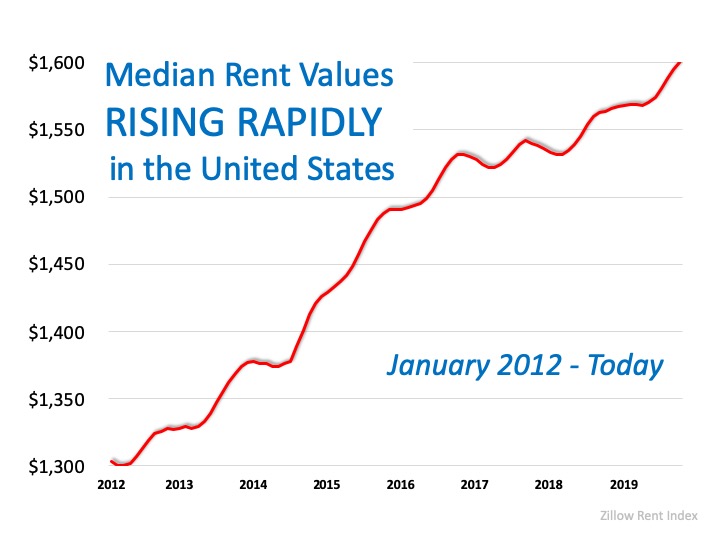
With average rents on the rise, this year-over-year increase may not sound like much, but it can add up – fast. The math on how much extra it will cost you over time surely doesn’t lie.

Here’s an example: On a $1,500 rental payment, an increase of 1.4% adds an additional $21 dollars per month to your payment. When multiplied by the twelve months in a year, it’s a $252 overall annual increase. The price continues to multiply when you rent year after year, as rental prices rise.

History shows how average rental prices have been increasing each year, and there doesn’t seem to be much end in sight. Here’s a look at how rents have grown since 2012 alone:

Why not lock down your monthly housing expense, and at the same time build additional net worth for you and your family? If you’re thinking about buying a home, consider the financial benefits of what homeownership can do for you, especially while the market conditions are strong and current mortgage rates are low.

In Conclusion

With average rents continuing to rise, now may be a great time to stabilize your monthly payment by becoming a homeowner and locking into a low mortgage rate. Let’s get together to discuss how taking advantage of the current market conditions might work for you.

Posted in Buyers, Rent vs Buy
Dec. 23, 2019

2020 Forecast Shows Continued Home Price Appreciation


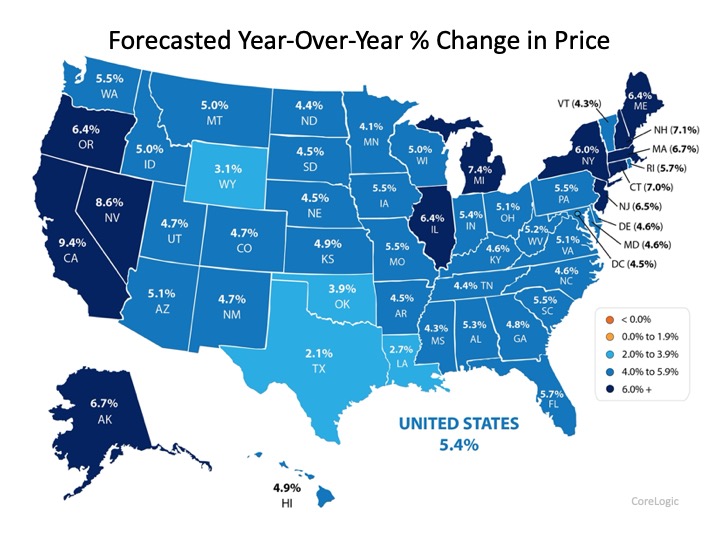
Questions continue to rise around where home prices will head in 2020. The latest forecast from CoreLogic shows continued appreciation at 5.4% over the next year:


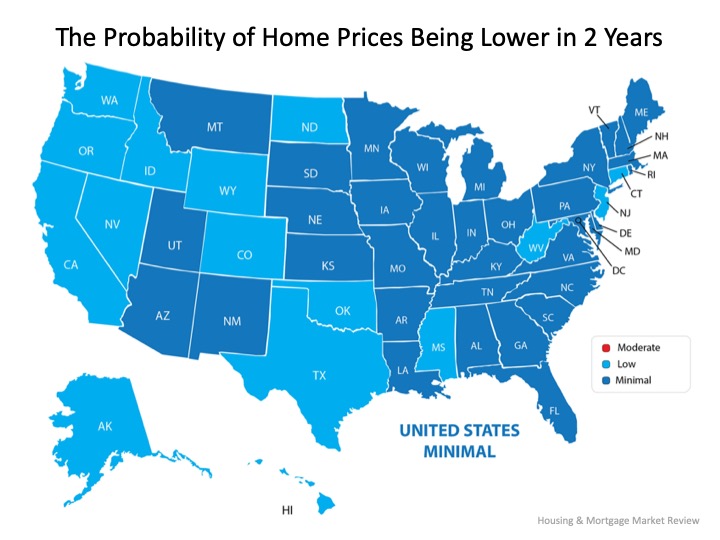
Additionally, ARCH Mortgage Insurance Company in their current Housing and Mortgage Market Review revealed their latest ARCH Risk Index, which estimates the probability of home prices being lower in two years. Based on the most recent results, 32 of the 50 U.S. states (plus D.C.) had a minimal probability of lowering by 2021.


Bottom Line

Experts forecast home price appreciation to continue at a moderate rate as we move through 2020 and beyond. With appreciation growing, let’s get together and plan for your next move.

Posted in Buyers, Sellers
Dec. 23, 2019

The Biggest Issue Facing Housing Next Year

This coming year the housing market will be defined by 3 things- inventory, interest rates, and appreciation.  But the biggest issue the housing market will face in 2020 is an inventory shortage. There aren’t enough homes on the market for buyers, especially on the lower end of the market. This is a topic that has come up frequently within the past several months.

Based on what is forecasted, we know that interest rates are projected to remain low and that appreciation is expected to continue as we move into 2020.  Additionally, the upcoming election will provoke many unique perspectives on the health of the US housing market. The challenge will be understanding what is actually happening and how you can best position yourself if you are thinking of buying or selling your home.

Here are several perspectives to consider on the inventory issue facing housing next year:

According to realtor.com:


“Despite increases in new construction, next year will once again fail to
bring a solution to the inventory shortage that has plagued the housing
market since 2015. Inventory could reach a historic low as a steady flow of
demand, especially for entry level homes, and declining seller sentiment
combine to keep a lid on sales transactions.”


Diana Olick at CNBC:


“Inventory has been falling annually for five straight months, after it
recovered slightly toward the end of last year, due to a spike in mortgage rates.
Rates began falling again by spring of this year. Homebuilders have
been increasing production slowly, but it’s not enough to meet the
increasingly strong demand.”


George Ratiu, Senior Economist with realtor.com


“As millennials — the largest cohort of buyers in U.S. history — embrace
homeownership and take advantage of this year’s unexpectedly low
mortgage rates, demand is outstripping supply, causing inventory to
vanish. The housing shortage is felt acutely at the entry-level of the
market, where most millennials are looking to break into the market for
their first home.”


Bottom Line

The most important thing you can do is understand what is happening in your local market. You may not be able to avoid some of the issues brought on by low inventory, but you can be educated and prepared. Let’s connect and discuss the options that make the most sense for you and your family.


Posted in Buyers, Sellers
Dec. 19, 2019

5 Reasons to Sell This Winter

Below are five compelling reasons to list your house this winter.

1. Demand Is Strong

The latest Buyer Traffic Report from the National Association of Realtors (NAR) shows that buyer demand remains strong throughout the vast majority of the country. These buyers are ready, willing, and able to purchase, and are in the market right now. More often than not, in many areas of the country, multiple buyers are competing with each other to buy the same home.

Take advantage of the buyer activity currently in the market.

2. There Is Less Competition Now

Inventory is still under the 6-month supply needed for a normal housing market. This means in the majority of the country, there are not enough homes for sale to satisfy the number of buyers in the market.

Historically, a homeowner would stay an average of six years in his or her home. Since 2011, that number has hovered between nine and ten years. There is a pent-up desire for many homeowners to move as they were unable to sell over the last few years due to a negative equity situation. As home values continue to appreciate, more and more homeowners will be given the freedom to move.

Many homeowners were reluctant to list their homes over the last couple of years, for fear they would not find a home to move into. That is all changing now as more homes come to market at the higher end. The choices buyers have will continue to increase. Don’t wait until additional inventory comes to market before you decide to sell.

3. Buyers Are Serious at This Time of Year

Traditionally, homeowners think about spring as a great time to list their homes, when more buyer traffic may be out there actively searching. In the winter, however, the buyers who are seeking a home – whether for relocation or otherwise – are serious ones. They’re ready to make offers and they’re eager to move, often quickly. Your house may be exactly what they’re looking for, so listing when other potential sellers are holding off may be your best opportunity to shine.

4. There Will Never Be a Better Time to Move Up

If your next move will be into the premium or luxury market, now is the time to move up. There is currently ample inventory for sale at higher price ranges. This means if you’re planning on selling a starter or trade-up home and moving into your dream home, you’ll be able to do that now. Demand for your entry-level home is high, and inventory in the luxury or premium market is too.

According to CoreLogic, prices are projected to appreciate by 5.6% over the next year. If you are moving to a higher-priced home, it will wind up costing you more in raw dollars (both in down payment and in your mortgage) if you wait.

5. It’s Time to Move On With Your Life

Look at the reason you decided to sell in the first place and determine whether it’s worth waiting. Is money more important than being with family? Are you ready to go on with your life the way you think you should?

Only you know the answers to these questions. You have the power to take control of the situation by putting your home on the market this winter. Perhaps the time has come for you and your family to move on and start living the life you desire.

That is what is truly important.

Posted in Buyers, Sellers
Dec. 19, 2019

Taking the Fear Out of the Mortgage Process

A considerable number of potential buyers shy away from the real estate market because they’re uncertain about the buying process – particularly when it comes to qualifying for a mortgage.

For many, the mortgage process can be scary, but it doesn’t have to be! 

In order to qualify in today’s market, you’ll need a down payment (the average down payment on all loans last year was 5%, with many buyers putting down 3% or less), a stable income, and a good credit history.

Once you’re ready to apply, here are 5 easy steps Freddie Mac suggests to follow:


  1. Find out your current credit history and credit score– Even if you don’t have perfect credit, you may already qualify for a loan. The average FICO Score® for all closed loans in September was 737, according to Ellie Mae.
  2. Start gathering all of your documentation – This includes income verification (such as W-2 forms or tax returns), credit history, and assets (such as bank statements to verify your savings).
  3. Contact a professional – Your real estate agent will be able to recommend a loan officer who can help you develop a spending plan, as well as help you determine how much home you can afford.
  4. Consult with your lender – He or she will review your income, expenses, and financial goals in order to determine the type and amount of mortgage you qualify for.

Talk to your lender about pre-approval – A pre-approval letter provides an estimate of what you might be able to borrow (provided your financial status doesn’t change) and demonstrates to home sellers that you’re serious about buying.

Bottom Line

Do your research, reach out to professionals, stick to your budget, and be sure you’re ready to take on the financial responsibilities of becoming a homeowner.

Posted in Buyers
Dec. 19, 2019

Expert Advice: 3 Benefits to Owning a Home

Success is something often worth repeating, and Brent Sutherland, a Certified Financial Planner and Real Estate Investor, has certainly made his way in a momentum-driving direction. Here are 3 tips he shares from a recent piece in Business Insider on the benefits of owning real estate:

1. Real estate diversifies your income

“While it is certainly important to be properly diversified with your
investments, it is even more important to be diversified with your income.
This is because the largest financial risk for most of you is the loss of your
primary source of income, which is typically in the form of a day job.”


The article highlights how having multiple sources of income, such as those derived from real estate investments, can eventually lead to relying less and less on a day job. Sound dreamy? It can be. When done well, real estate investments may eventually open up your time and the financial freedom to explore other things, like travel and other aspirations you may have for the future, particularly in the golden years of retirement.

2. Real estate produces near-immediate results

“You can achieve and feel the results almost immediately. Property
improvements are visible and tangible. You can cash, spend, and invest
rent payments. Today! Not 30 years in the future.”


Currently, home prices are appreciating in all price ranges, and just last week CoreLogic announced their 12-month home value projection at 5.6%, an increase from 4.5% noted earlier this summer. With that in mind, real estate today is definitely driving immediate results!

3. Passive income can help you become financially independent sooner

“If you need $40,000 a year to live, you could alternatively invest in assets
that generate an 8% cash-on-cash return. This is a very reasonable
assumption. And it means you would only need to save a total of $500,000
(instead of $1 million). Yet, your investments would still meet your annual
household living needs.

While returns, taxes, and inflation can, of course, affect your timeline,
cash-flowing real-estate is a clear asset.”


Homeownership is a form of ‘forced savings.’ Every time you pay your mortgage, you’re contributing to your net worth by increasing the equity in your home, bringing you one step closer to true financial independence.

Bottom Line

If you want to increase your savings and overall net worth, real estate is a great way to go. To learn how you can make it happen, let’s get together to discuss the process.


Posted in Buyers, Sellers