At Home with Team Gabriel

You’ll find our blog to be a wealth of information, covering everything from local market statistics and home values to community happenings. That’s because we care about the community and want to help you find your place in it. Please reach out if you have any questions at all. We’d love to talk with you!

Sept. 8, 2023

Increase Your Home’s Value: Expert Strategies for a Successful Sale

Sharing the three most important things you need to do when selling.

 
If you’re thinking about selling your home anytime soon, you need to know how to get the most money out of it. Too many people fall into the trap of thinking they don’t need to put in any work or that they need to spend enormous amounts of money to increase the value of their homes. The truth is that effort is necessary, but a little bit can go a long way. Here are my three tips for how to increase the value of your home: 


1. Make a good first impression. The truth is that the first look can make or break your sale. Potential buyers have already judged your house before they walk in the door—and in today’s market, they’ve even made judgments before that when they saw photos online! Therefore, put in the work to get high-quality, professional photos, as well as improve your curb appeal. This can be as easy as mowing the lawn and putting in fresh flowers. 


2. Display the value of your space. Start by decluttering your home. Potential buyers don’t want to see your photos and knick-nacks, but they do want to see that there’s plenty of room to store their things. Therefore, clearing out some of your closets, for example, can make a big difference. Also, consider professional staging and high-quality lighting. These things will showcase the great parts of your home. 


3. Work with a trusted Realtor. Who you work with matters. Unfortunately, too many people just work with the first agent they talk to, who says they can get a good price, and then end up suffering because of that. You need to work with an experienced professional with a top-notch marketing plan who is great at negotiations and can help you understand the current market to get the most money possible. 


There are many things you can work on to get top dollar for your property, but those are the three most important ones. If you have any questions, want advice on what else you can do, or want to work with this experienced professional, don’t hesitate to reach out! You can call or email me anytime, and I would love to help you. 

 

Posted in Expert Advice, Sellers
Sept. 6, 2023

Mortgage Rates: Past, Present, and Possible Future

If you’re hoping to buy a home this year, you’re probably paying close attention to mortgage rates. Since mortgage rates impact what you can afford when you take out a home loan – and affordability is a challenge today – it’s a good time to look at the big picture of where mortgage rates have been historically compared to where they are now. Beyond that, it’s important to understand their relationship with inflation for insights into where mortgage rates might go in the near future.

Giving Context to the Sticker Shock

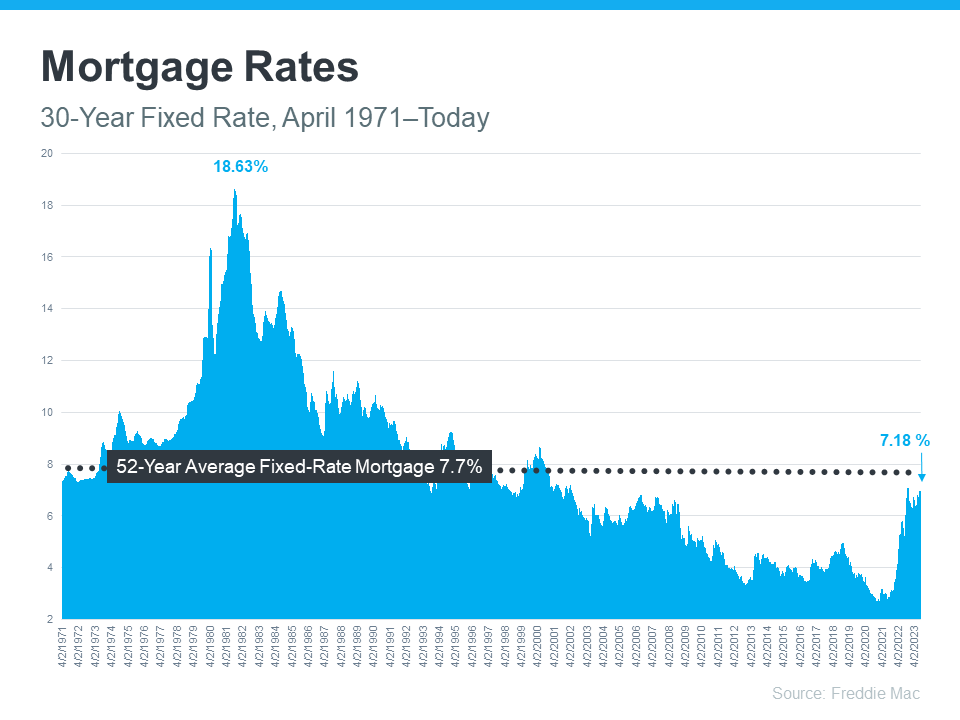
Freddie Mac has been tracking the 30-year fixed mortgage rate since April of 1971. Every week, they release the results of their Primary Mortgage Market Survey, which averages mortgage application data from lenders across the country (see graph below):

Looking at the right side of the graph, mortgage rates have increased significantly since the start of last year. But even with that rise, today’s rates are still below the 52-year average. While that historical perspective is good context, buyers have gotten used to mortgage rates between 3% and 5%, which is where they’ve been over the past 15 years.

That’s important because it explains why the recent jump in rates might have you feeling sticker shock even though they’re close to their long-term average. While many buyers have adjusted to the elevated rates over the past year, a slightly lower rate would be a welcome sight. To determine if that’s a realistic possibility, it’s important to look at inflation.

Where Could Mortgage Rates Go in the Future? 

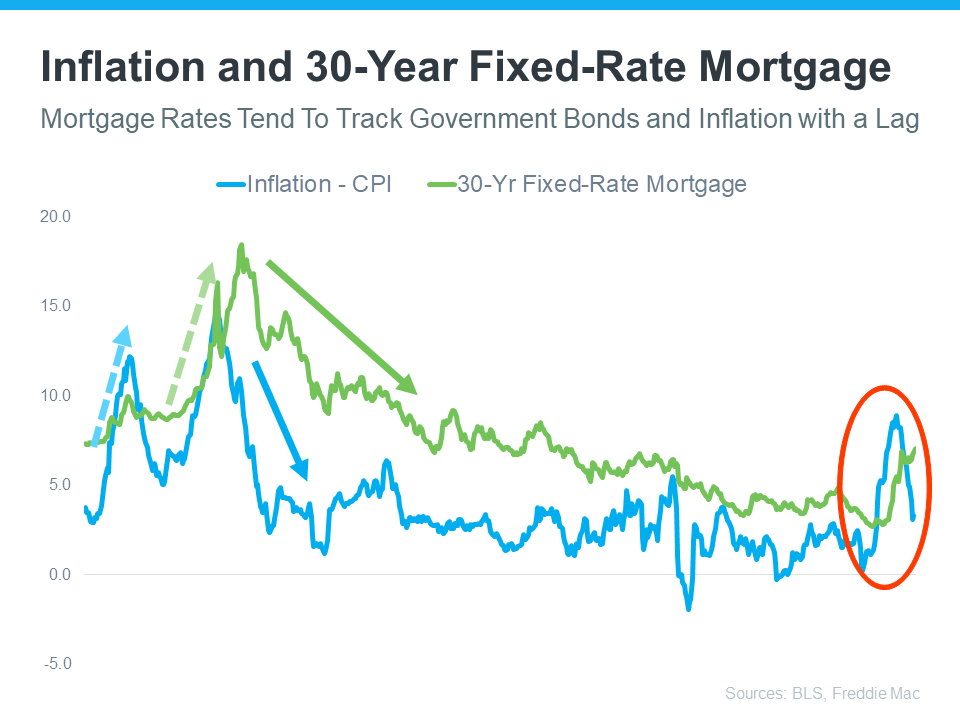
The Federal Reserve has been working hard to lower inflation since early 2022. That’s significant because, historically, there’s been a connection between inflation and mortgage rates (see graph below):

This graph shows a pretty reliable relationship between inflation and mortgage rates. Looking at the left side of the graph, each time inflation moves significantly (shown in blue), mortgage rates follow suit shortly after (shown in green).

The circled portion of the graph points out the most recent spike in inflation, with mortgage rates following closely behind. As inflation has moderated a bit this year, mortgage rates haven’t yet made a similar move.

That means, if history is any guide, the market is waiting for mortgage rates to follow inflation and head back down. It’s impossible to accurately predict where mortgage rates will go for sure, but moderating inflation means mortgage rates going down in the near future would fit a well-established trend. 

In Conclusion

To understand where mortgage rates may be going, it’s helpful to look at where they’ve been in the past. There’s a clear connection between inflation and mortgage rates, and if that historical relationship holds true, the recent decline in inflation may mean good news for the future of mortgage rates and your homeownership goals.

Sept. 5, 2023

Expert Home Price Forecasts Revised Up for 2023

Toward the end of last year, there were a number of headlines saying home prices were going to fall substantially in 2023. That led to a lot of fear and questions about whether there was going to be a repeat of the housing crash that happened back in 2008. But the headlines got it wrong.

While there was a slight home price correction after the sky-high price appreciation during the ‘unicorn’ years, nationally, home prices didn’t come crashing down. If anything, prices were a lot more resilient than many people expected.

Let's take a look at some of the expert forecasts from late last year stacked against their most recent forecasts to show that even the experts recognize they were overly pessimistic.

Expert Home Price Forecasts: Then and Now

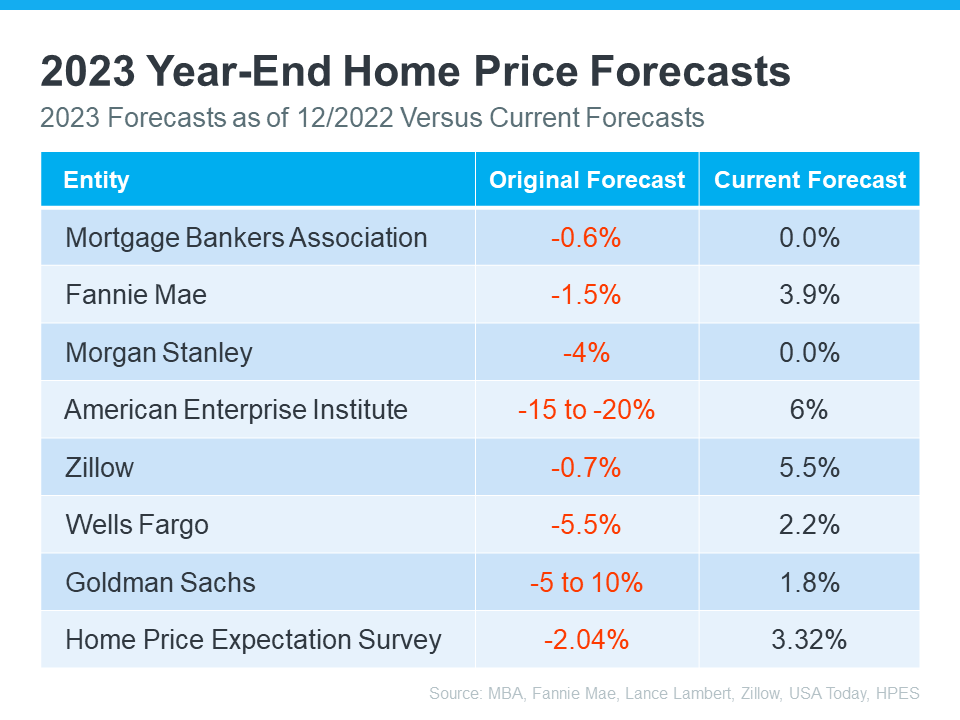
This visual shows the 2023 home price forecasts from seven organizations. It provides the original 2023 forecasts (released in late 2022) for what would happen to home prices by the end of this year and their most recently revised 2023 forecasts (see chart below):

As the red in the middle column shows, in all instances, their original forecast called for home prices to fall. But, if you look at the right column, you’ll see all experts have updated their projections for the year-end to show they expect prices to either be flat or have positive growth. That’s a significant change from the original negative numbers.

There are a number of reasons why home prices are so resilient to falling. As Odeta Kushi, Deputy Chief Economist at First American, says:

“One thing is for sure, having long-term, fixed-rate debt in the U.S. protects homeowners from payment shock, acts as an inflation hedge - your primary household expense doesn't change when inflation rises - and is a reason why home prices in the U.S. are downside sticky.”

A Look Forward To Get Ahead of the Next Headlines

For home prices, you’re going to continue to see misleading media coverage in the months ahead. That’s because there’s seasonality to home price appreciation and they’re going to misunderstand that. Here’s what you need to know to get ahead of the next round of negative headlines.

As activity in the housing market slows at the end of this year (as it typically does each year), home price growth will slow too. But, this doesn’t mean prices are falling – it’s just that they’re not increasing as quickly as they were when the market was in the peak homebuying season.

Basically, deceleration of appreciation is not the same thing as home prices depreciating.

In Conclusion

The headlines have an impact, even if they’re not true. While the media said home prices would fall significantly in their coverage at the end of last year, that didn’t happen. Let’s connect so you have a trusted resource to help you separate fact from fiction with reliable data.

Posted in Market Updates
Sept. 5, 2023

Why It’s Still a Seller’s Market Today

Even though activity in the housing market has slowed from the frenzy that was the ‘unicorn’ years, it’s still a seller’s market because the supply of homes for sale is so low. But what does that really mean for you? And why are conditions today so good if you want to sell your house?

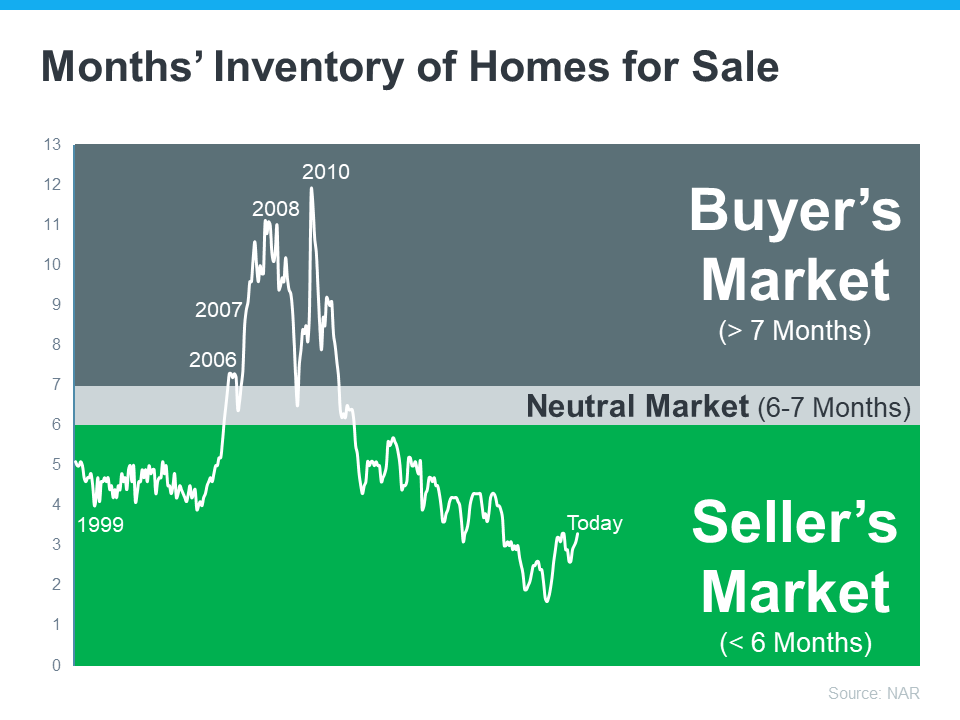
The latest Existing Home Sales Report from the National Association of Realtors (NAR) shows housing supply is still astonishingly low. Housing inventory is measured by the number of available homes on the market. It’s also measured by months’ supply, meaning the number of months it would take to sell all those available homes based on current demand. In a balanced market, there’s usually about a six-month supply. Today, we have only about 3 months’ supply of homes at the current sales pace (see graph below): 

As the visual shows, given the current inventory of homes, it’s still a seller's market.

Today, we’re nowhere near what’s considered a balanced market. In fact, the current months’ supply is half of what’s typical of a normal market. That means there just aren’t enough homes to go around based on today’s buyer demand.

As Lawrence Yun, Chief Economist for NAR, says:

“There are simply not enough homes for sale. The market can easily absorb a doubling of inventory.”

How Does Being in a Seller’s Market Benefit You?

Sellers, these conditions give you a real edge. Right now, there are buyers who are ready, willing, and able to purchase a home. And, because there's a shortage of homes up for sale, the ones that do hit the market are like magnets for those buyers.

If you work with a local real estate agent to list your house right now, in good condition, and at the right price, it could get a lot of attention. You might even end up with multiple offers.

In Conclusion

Today’s seller’s market sets you up with a big advantage when you sell your house. Because supply is so low, your house will be in the spotlight for motivated buyers who are craving more options. Let’s connect so you understand what’s happening in our local area as you get ready to enter the market.

Aug. 31, 2023

How Inflation Affects the Housing Market

Have you ever wondered how inflation impacts the housing market? Believe it or not, they’re connected. Whenever there are changes to one, both are affected. Here’s a high-level overview of the connection between the two.

The Relationship Between Housing Inflation and Overall Inflation

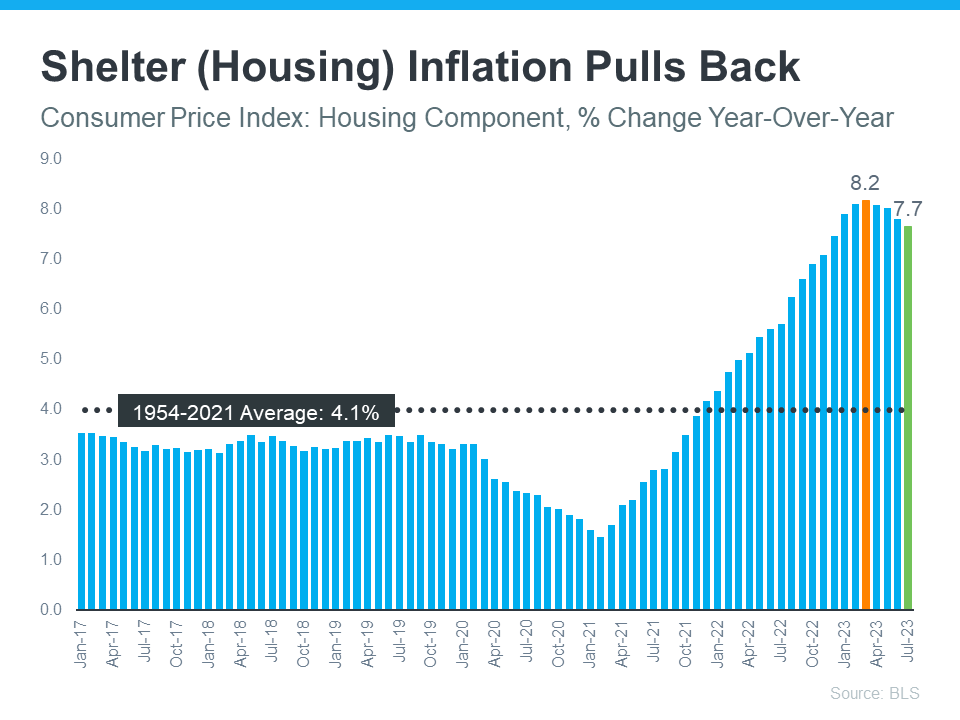
Shelter inflation is the measure of price growth specific to housing. It comes from a survey of renters and homeowners that’s done by the Bureau of Labor Statistics (BLS). The survey asks renters how much they’re paying in rent, and homeowners how much they’d rent their homes for, if they weren’t living in them.

Much like overall inflation measures the cost of everyday items, shelter inflation measures the cost of housing. And for four consecutive months, based on that survey, shelter inflation has been coming down (see graph below):

Why does this matter? Well, shelter inflation makes up about one-third of overall inflation, as measured by the Consumer Price Index (CPI). So, when shelter inflation moves, it leads to noticeable moves in overall inflation. That means the recent dip in shelter inflation might be a sign that overall inflation could fall in the months ahead.

That moderation would be a welcome sight for the Federal Reserve (the Fed). They’ve been working to get inflation under control since early 2022. While they’ve made some headway (it peaked at 8.9% in the middle of last year), they’re still trying to get to their 2% goal (the latest report is 3.3%). 

Inflation and the Federal Funds Rate  

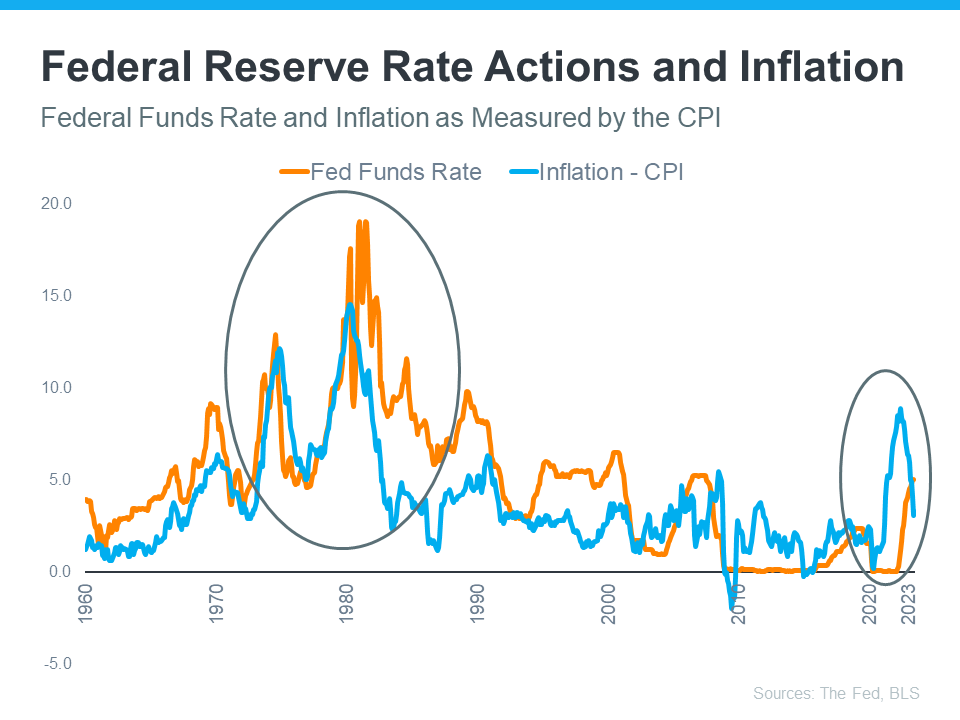
What’s the Fed been doing to lower inflation? They’ve been increasing the Federal Funds Rate. That interest rate influences how much it costs banks to borrow money from each other. When inflation climbed, the Fed responded by raising the Federal Funds Rate to keep the economy from overheating.

The graph below shows the relationship between the two. Each time inflation (shown in the blue line) starts to climb, the Fed raises the Federal Funds Rate (shown in the orange line) to try to get it back to their target of 2% (see below):

The circled portion of the graph shows the most recent spike in inflation, the Fed’s actions to raise the Federal Funds Rate to fight that, and the moderation of inflation that happened in response to that hike. As inflation gets closer to the Fed’s current 2% goal, they may not need to raise the Federal Funds Rate much further.

A Brighter Future for Mortgage Rates?

So, what does all of this mean for you? While the actions coming out of the Fed don’t determine mortgage rates, they do have an impact. As Mortgage Professional America (MPA) explains:

“. . . mortgage rates and inflation are connected, however indirectly. When inflation rises, mortgage rates rise to keep up with the value of the US dollar. When inflation drops, mortgage rates follow suit.”

While no one can predict the future for mortgage rates, it’s encouraging to see the signs of moderating inflation in the economy

In Conclusion

Whether you’re looking to buy, sell, or just stay informed about the housing market, let’s connect.

Aug. 30, 2023

Buyer Traffic Is Still Stronger than the Norm

Are you putting off selling your house because you’re worried no one’s buying because of where mortgage rates are? If so, know this: the latest data shows plenty of buyers are still out there, and they’re purchasing homes today. Here’s the data to prove it.

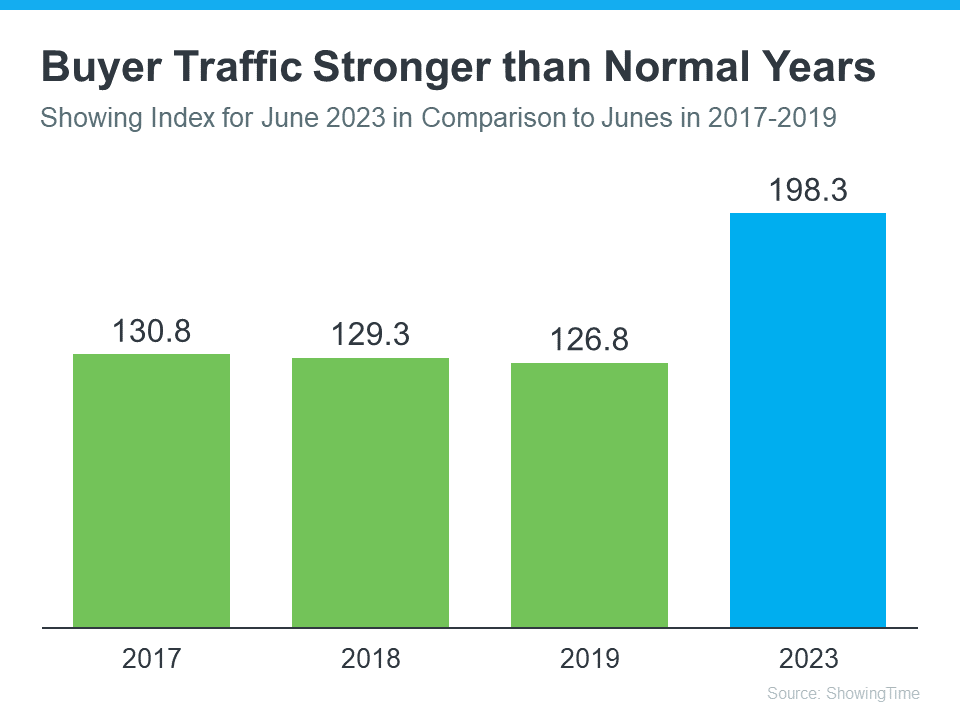
The ShowingTime Showing Index is a measure of buyers touring homes. The graph below uses the latest numbers available and compares them to the same month in the last normal years to show just how active today’s buyers still are:

As you can see, when June 2023 numbers are stacked alongside what’s typical for the housing market at this time of year, it's clear buyers are still active. And, they’re actually a lot more active than the norm.
If you’re wondering how this could possibly be true, it’s because buyers are getting used to higher mortgage rates and accepting them as the new reality. As Danielle Hale, Chief Economist, Realtor.com, explains:

“Interest rate hikes continue to further cut into buyers' purchasing power, although they appear to have adapted to the higher mortgage rate environment . . .”

It’s simple. Buyers will always need to buy, and those who can afford to move at today’s rates are going to do so.

The Key Takeaway for You

While it’s true things have slowed down from the frenzy of the last couple of years, it doesn’t mean today’s market is at a standstill. The reality is: buyer traffic is still strong today. Even with today’s mortgage rates, plenty of buyers are still making their moves. So why delay your own move when there’s clearly a market for your house?

In Conclusion

Don’t put off your plans because you’re worried no one will buy your home. The opposite is true, and more buyers are more active than the norm. Let’s connect to get your house ready to sell, so it makes the best first impression possible on those eager buyers.

Aug. 30, 2023

Recent Closing - August

Posted in Video Clips
Aug. 22, 2023

The Seller’s Handbook: 3 Essential Steps to Ace Your Home Sale

Here are three essential tips homeowners need to know before selling.

Want to sell your home? Get a home value report
Want to buy a home? Search all homes for sale

Are you looking to sell your home in the near future? If you are, you need a plan to get the most money possible for your home while ensuring a smooth sale. As a real estate agent, I help people buy and sell houses every single day, so I know what it takes to get top dollar for your property. Here are three things you absolutely need to know before you list your home:

1. Find the perfect price. Pricing can make or break a deal. It's like finding the perfect balance between attracting potential buyers and maximizing your profits. To find the best price for your home, lean on your agent to find comparable homes that have sold recently, analyze the market, and factor in market trends. Remember, setting an inflated price can turn buyers away, while pricing too low might make you lose out on some well-deserved cash. It's all about finding that sweet spot.

2. Master your curb appeal. First impressions matter, and when it comes to selling your house, curb appeal can make a world of difference. Think about it—when you're driving through a neighborhood, don't you gravitate towards homes that catch your eye? You want potential buyers to fall in love with your property from the moment they lay eyes on it. So, invest some time and effort in sprucing up the exterior. A fresh coat of paint, a well-maintained lawn, and some tasteful landscaping can work wonders. Remember, you want your house to stand out for all the right reasons and create a lasting impression.

"First impressions matter in real estate."

3. Be upfront about potential issues. Honesty is key when selling a house. You must disclose any known issues or defects to potential buyers. It’s tempting to hide certain things to make your house seem more appealing, but this can lead to serious legal troubles down the road. Be transparent about any past or current problems your property may have. It's better to address them upfront rather than dealing with unhappy buyers later on. Remember, a solid foundation of trust and transparency will help you close the deal smoothly and with a clear conscience.

Overall, the best course of action is to work with an experienced agent who knows these strategies and more. If you’d like more tips on how to ensure a smooth home sale, just call or email. Make it a great day!

Posted in Expert Advice, Sellers
Aug. 17, 2023

People Want Less Expensive Homes – And Builders Are Responding

In today’s housing market, there are two main affordability challenges impacting buyers: mortgage rates that are higher than they’ve been the past couple of years, and rising home prices caused by low inventory. To overcome those challenges, many people are working with their agents to find less expensive homes. And with newly built homes making up a historically large percentage of the total available inventory today, that search often includes brand new homes.

People Are Spending Less on Newly Built Homes

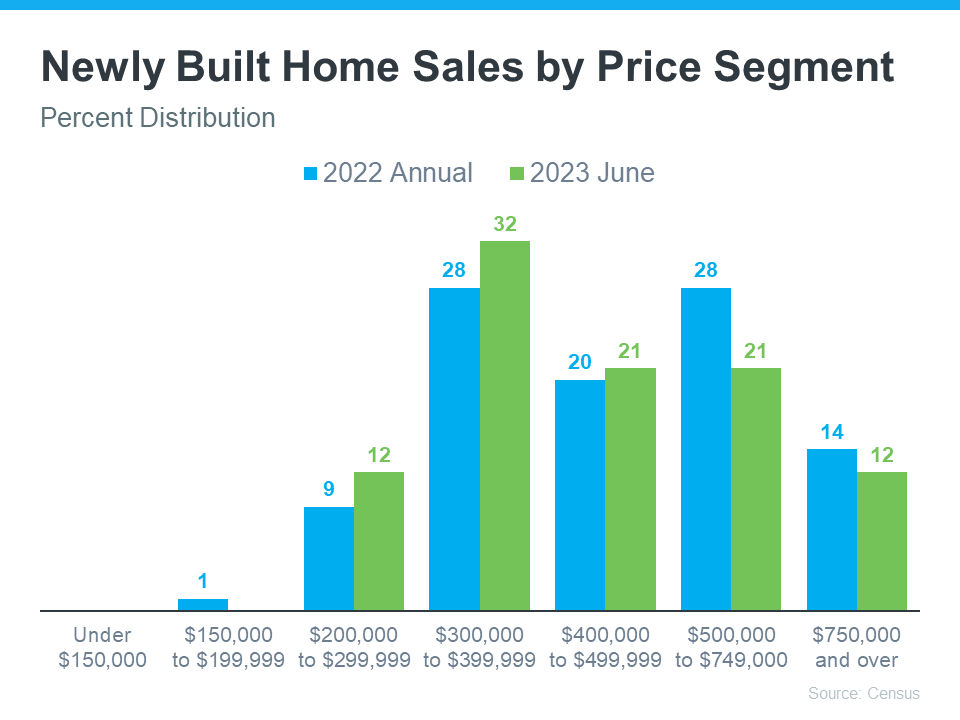
The graph below uses the latest information from the Census to show, in June, more of the newly built home sales in this country were in lower price ranges than in 2022:

Last year, only 58% of newly built home sales were less than $500,000. This June, that number was up to 65%. This means more people are buying less expensive newly built homes right now while affordability remains a challenge. 

Builders Are Offering Lower-Cost Options

Builders have picked up on this trend and are reacting accordingly. George Ratiu, Chief Economist at Keeping Current Matters, explains:

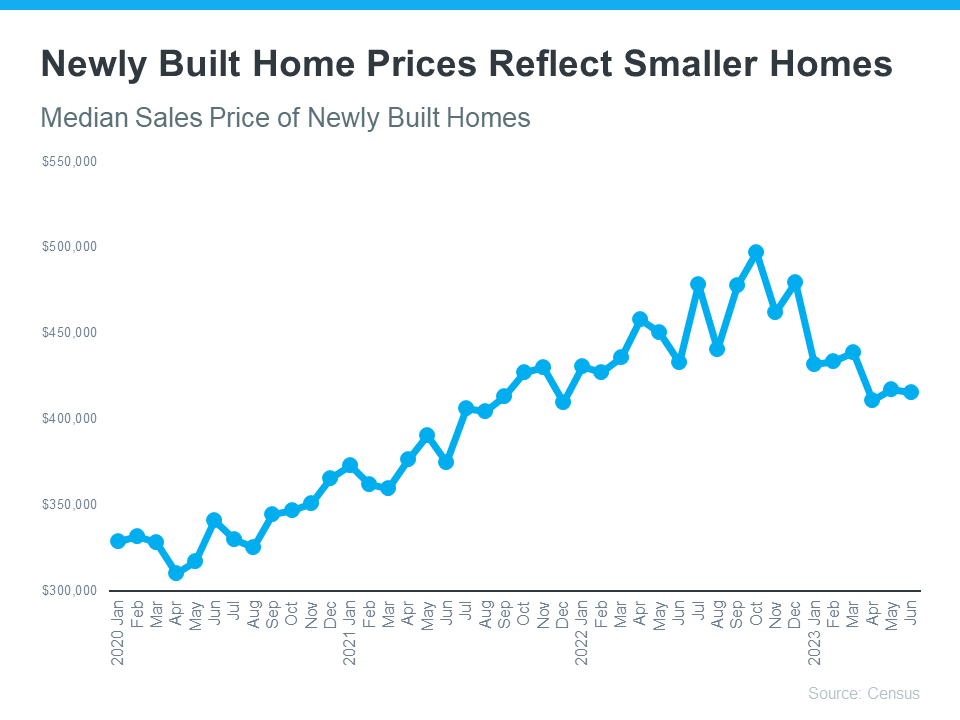
“Builders are also responding to this shift by bringing slightly smaller homes to market in an effort to meet lower price points . . .”

New data from the Census further confirms this pattern – it shows the median sales price of newly built homes has dipped down in recent months (see graph below):

And as Mikaela Arroyo, Director of the New Home Trends Institute at John Burns Real Estate Consulting, says, the builders who are most responsive to this trend are forming pathways to homeownership:

 “. . . it is creating opportunities for people to be able to afford an entry-level home in an area. . . . if you get that size down, that automatically will make it a more affordable home. The [builders] that are decreasing [size] the most are probably the ones that try to build more of an affordable product.”

 How an Agent Can Help

Builders producing smaller, less expensive newly built homes give you more affordable options at a time when that’s really needed. If you’re hoping to buy a home soon, partner with a local real estate agent to find out what’s available in your area. An agent can help you look at newly built homes or ones under construction nearby. 

In Conclusion

If you’re having a hard time finding a home you like in your budget, let’s connect. You need a real estate professional who knows all about the latest inventory in our area, including homes still under construction or just built. That way you have an expert on your side who can provide information on builder reputations, builder contracts and negotiations, and more to help you with the homebuying process.

Aug. 16, 2023

Where Are People Moving Today and Why?

Plenty of people are still moving these days. And if you’re thinking of making a move yourself, you may be considering the inventory and affordability challenges in the housing market and wondering what you can do to help offset those. A new report from Gravy Analytics provides insight into where people are searching for homes and what they’re prioritizing most right now. That information could help you plan your own move.

1. People Are Moving to Cities with Lower Housing Costs

One big factor motivating where buyers are going is affordability and that’s no big surprise. People are relocating to areas that have less expensive housing options. As a result, small cities are thriving. Hannah Jones, Economics Data Analyst at Realtor.com, summarizes why:

“Affordability is still very much front and center . . . a lot of what’s available is outside of the price range of many buyers. . . . so they look elsewhere for a little more bang for the buck.”

The takeaway for you? If you’re having trouble finding a home that fits your budget, it may help to browse other, more affordable locations nearby.

2. People Want to Live Where They Vacation

And, if you’re already expanding your search radius, you may be able to include a location that features your favorite type of destination, like a suburb near the beach or a mountain town. Data shows many other homeowners are making that type of move a priority today. According to the same report from Gravy Analytics:

“Whether it’s the opportunity to enjoy more weekend hikes in the mountains or to wake up to a lakeside sunrise, people are moving to areas that were once thought of as vacation spots.”

Even with today’s home prices and mortgage rates, here’s why a move like this could be possible for you. If you’re already a homeowner, the equity you’ll get when you sell your current house can help fuel that move and give you the down payment you’d need for your dream home.

3. People Who Work Remotely Are Taking Advantage of that Flexibility

Ongoing remote work is another major factor in where people are moving. A recent report from the McKinsey Global Institute says this about recent movement patterns:

“Many of these moves happened because employees untethered from their daily commutes began to care less about how far they lived from the office.

If you’re a remote or hybrid worker, you don’t have to live in the same city, or sometimes even the same state, as your job. That means you can prioritize other things, like being closer to loved ones, when buying a home.

In fact, the same McKinsey Global Institute report notes for people who moved during the pandemic, 55% reported moving farther from the office. And since remote work is still a popular choice today, homebuyers will likely continue to take advantage of that flexibility.

In Conclusion

Lots of people are still moving today. If you want help navigating today’s inventory or affordability challenges, and expert advice to help you find your ideal home, let's connect.

Posted in Buyers, Housing Myths