Home Search
At Home with Team Gabriel
You’ll find our blog to be a wealth of information, covering everything from local market statistics and home values to community happenings. That’s because we care about the community and want to help you find your place in it. Please reach out if you have any questions at all. We’d love to talk with you!
New Listing - 315 East Street South, Suffield, CT
3 Steps for the Perfect Winter Home Sale
Here are three easy tips to help you sell your home this winter.
Conventional wisdom says spring is the best time of year to sell your home. While spring is definitely the busiest time of year to buy or sell a house, that doesn’t mean you can’t sell in winter! Even if it’s freezing and snowing, you can still get a great deal for your house; you just need to put in a little work. Here are my best tips to help you get your home market-ready for the winter months:
1. Create a warm and inviting atmosphere. The cold and snowy weather can be a bit of a downer, but it gives your home a chance to show off! Consider lighting subtle candles to give your home a nice smell and add some extra light. You may want to play some calming music as well. Finally, make sure you keep the heat up to a comfortable temperature for your buyers so they feel cozy as they view your home.
"There are many advantages to selling in the winter."
2. Get your curb appeal ready for winter. First impressions matter in real estate, which is why how your home looks from the outside is so important. The winter months provide unique challenges for this situation, like snow. Make sure your driveway is cleared off and buyers have a clear path to your front door. Also, consider some subtle winter decorations to liven things up; just make sure you don’t go too far!
3. Let in as much light as possible. Winter isn’t exactly known for its abundance of natural light, which is why loads of it will make your home really stand out. Open all the windows you can, turn on the lights in places you can’t, and consider using candles to brighten your property up.
It’s possible to get a great deal for your home any time of the year—as long as you know what to do. If you have questions about this topic or anything else, please call or email me. I am always willing to help!
3 Must-Do’s When Selling Your House in 2024

If one of the goals on your list is selling your house and making a move this year, you’re likely juggling a mix of excitement about what’s ahead and feeling a little sentimental about your current home.
A great way to balance those emotions and make sure you’re confident in your decision is to keep these three best practices in mind when you’re ready to sell.
1. Price Your Home Right
The housing market shifted in 2023 as mortgage rates rose and home price appreciation started to normalize once again. As a seller, you still need to recognize how important it is to price your house appropriately based on where the market is today. Hannah Jones, Economic Research Analyst for Realtor.com, explains:
“Sellers need to become familiar with their local market and work closely with a local agent to make sure their listing is attractive to buyers. Buyers feeling the pressure of affordability are likely to be pickier, so a well-priced, well-maintained home is the ticket to drumming up big demand.”
If you price your house too high, you run the risk of deterring buyers. And if you go too low, you’re leaving money on the table. An experienced real estate agent can help determine what your ideal asking price should be, so your house moves quickly and for top dollar.
2. Keep Your Emotions in Check
Today, homeowners are staying in their houses longer than they used to. According to the National Association of Realtors (NAR), since 1985, the average time a homeowner has owned their home has increased from 6 to 10 years (see graph below):
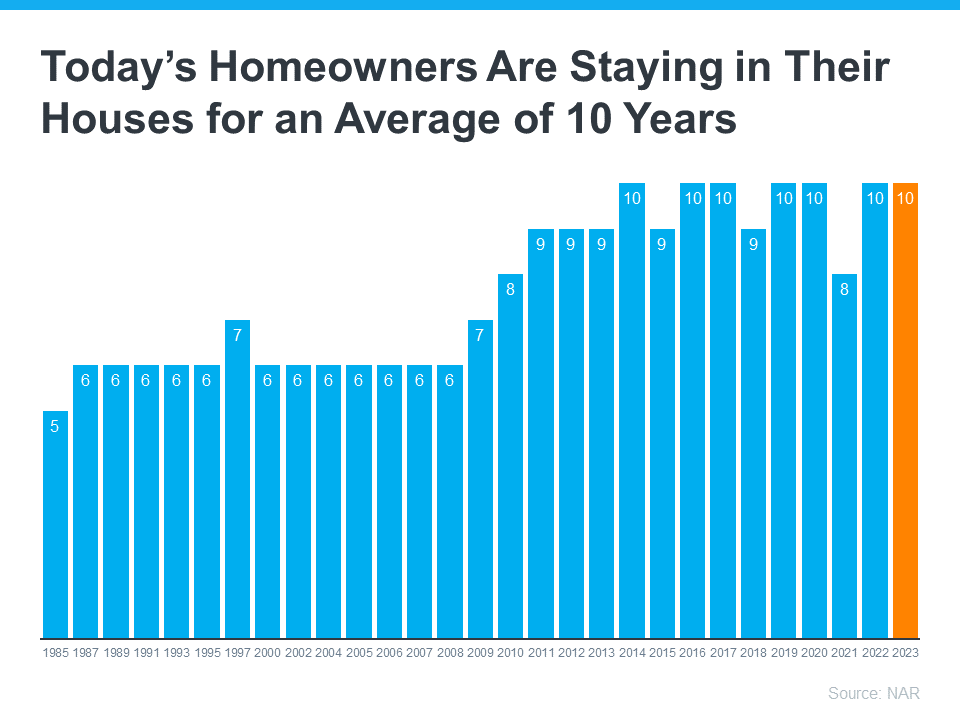
This is much more than what used to be the norm. The side effect, however, is when you stay in one place for so long, you may get even more emotionally attached to your space. If it’s the first home you bought or the house where your loved ones grew up, it very likely means something extra special to you. Every room has memories, and it’s hard to detach from the sentimental value.
For some homeowners, that makes it even tougher to separate the emotional value of the house from fair market price. That’s why you need a real estate professional to help you with the negotiations and the best pricing strategy along the way. Trust the professionals who have your best interests in mind.
3. Stage Your Home Properly
While you may love your decor and how you’ve customized your house over the years, not all buyers will feel the same way about your vibe. That’s why it’s so important to make sure you focus on your home’s first impression, so it appeals to as many buyers as possible.
Buyers want to be able to picture themselves in the home. They need to see themselves inside with their furniture and keepsakes – not your pictures and decorations. As Jessica Lautz, Deputy Chief Economist and Vice President of Research at NAR, says:
“Buyers want to easily envision themselves within a new home and home staging is a way to showcase the property in its best light.”
A real estate professional can help you with expertise on getting your house ready to sell.
In Conclusion
If you’re considering selling your house, let’s connect so you have help navigating the process while prioritizing these must-do’s.
Why You May Want To Seriously Consider a Newly Built Home
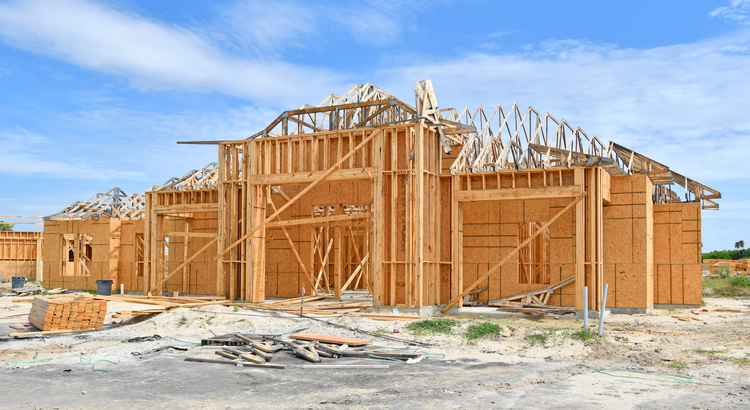 Are you putting off your plans to sell because you’re worried you won’t be able to find a home you like when you move? If so, it may be time to consider a newly built home and the benefits that come with one. Here’s why.
Near-Record Percentage of New Home Inventory
Newly built homes are becoming an increasingly significant part of today’s housing inventory. According to the most recent report from the National Association of Home Builders (NAHB):
“Newly built homes available for sale accounted for 31% of total homes available for sale in November, compared to an approximate 12% historical average.”
That means the percentage of the total homes available to buy that are newly built is well over two times higher than the norm. And even more new homes are on the way.
Recent data from the Census shows there’s been an uptick in both housing starts (where builders break ground on more new homes) and housing completions (homes where construction just wrapped).
And while some people may worry builders are building too many homes, that isn’t a concern – if anything, the recent increase is really good news. As Lawrence Yun, Chief Economist at the National Association of Realtors (NAR), explains:
“Even more home building will be needed with the housing shortage persisting in most markets . . . Another 30% rise in home construction can easily be absorbed in the marketplace . . .”
How This Helps You
Since the supply of existing homes for sale is still low right now, the increase of new-home construction can be a game changer because it gives you more options for your search.
Picture yourself in a home that’s new from the ground up: new appliances, fresh paint, fewer maintenance needs because everything is new, and so much more. Doesn’t that sound nice?
And it may be more within reach than you ever imagined. In addition, some builders are offering things like mortgage rate buy-downs for homebuyers right now. This can help offset today’s affordability challenges while also getting you into your dream home. In a recent article, Patrick Duffy, Senior Real Estate Economist at U.S. News, explains:
“Builders have been using mortgage interest rate buydowns for many years as a sales incentive whenever interest rates are relatively high, . . .Today more builders are offering rate buydowns for the entirety of the loan, allowing buyers to finance more home for the same payment amount.”
Just remember, the process of buying from a builder is different from buying from a home seller, so it’s important to partner with a trusted real estate agent who knows the local market. They’ll be your go-to resource for coordinating with the builder, reviewing contracts, and more.
In Conclusion
If you’re trying to sell so you can make a move but you’re having a hard time finding a home you like, let’s connect. That way you have a local expert to help you explore all of your options, including the newly built homes in our area.
Homeownership Is Still at the Heart of the American Dream
Buying a home is a powerful decision, and it remains at the heart of the American Dream. Unlike renting, owning a home means more than just having a place to live – it offers a sense of belonging, stability, and freedom. According to Nicole Bachaud, Senior Economist at Zillow:
“The American Dream is still owning a home. There’s a lot of pent-up demand for ownership; that isn’t going to go away.”
Let’s explore just a few of the reasons why so many Americans continue to value homeownership.
The Financial Benefits of Owning a Home
One possible reason homeownership is viewed so highly is because owning a home is a significant wealth-building tool. That may be why Jessica Lautz, Deputy Chief and VP of Research at the National Association of Realtors (NAR), says:
“Homeownership is the number one way to build wealth in America.”
Over time, owning a home not only helps boost your own net worth, but it also sets future generations up for success as you pass that wealth down. Habitat for Humanity explains:
“Overall, homeownership promotes wealth building by acting as a forced savings mechanism and through home value appreciation. Homeowners make monthly payments that increase their equity in their homes by paying down the principal balance of their mortgage. . . . In addition, owning a home promotes intergenerational homeownership and wealth building. Children of homeowners transition to homeownership earlier — lengthening the period over which they can accumulate wealth . . .”
It can also provide meaningful financial stability compared to renting. When you buy with a fixed-rate mortgage, you can lock in your monthly housing payments for the length of your home loan.
The Non-Financial Benefits of Homeownership
But, owning a home offers more than just financial benefits—it benefits you socially and emotionally too. Your home provides feelings of achievement, responsibility, and more. In a recent survey, Fannie Mae outlines just a few of these more emotionally-driven benefits, including:
“The top three were having control over what you do with your living space (94%) to having a sense of privacy and security (91%) and having a good place for your family or to raise your children (90%) . . .”
What Does That Mean for You?
If your idea of the American Dream involves greater freedom, security, and prosperity, homeownership could be a key player in bringing that dream to life. And with mortgage rates now on a downward trend, it might be a good time for you to consider making a move.
If you’re ready and able to buy, know that there are incredible benefits waiting at the end of your journey. You'll gain more than just a home – it's a place to grow your wealth and call your very own. Like Ksenia Potapov, Economist at First American says:
“...homeownership remains an important driver of wealth accumulation and the largest source of total wealth among most households.”
In Conclusion
Buying a home is a powerful decision and the cornerstone of the American Dream. If finding a place to call your own is part of your dream for this year, let’s connect to start the process today.
The Dramatic Impact of Homeownership on Net Worth
If you're trying to decide whether to rent or buy a home this year, here's a powerful insight that could give you the clarity and confidence you need to make your decision.
Every three years, the Federal Reserve releases the Survey of Consumer Finances (SCF), which compares net worth for homeowners and renters. The latest report shows the average homeowner’s net worth is almost 40X greater than a renter’s (see graph below):
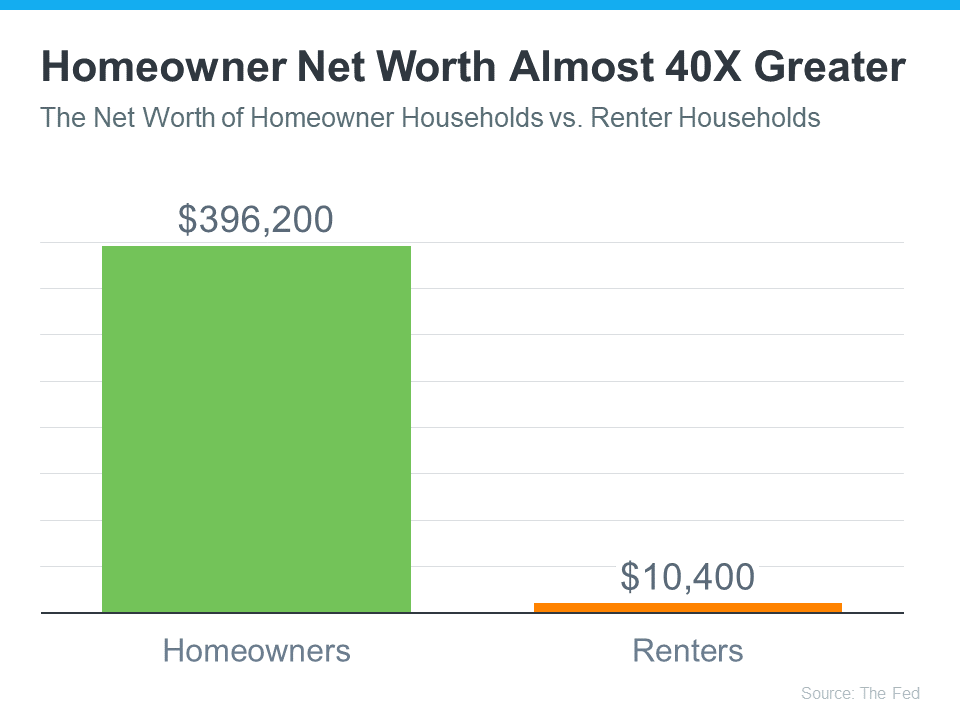
One reason a wealth gap exists between renters and homeowners is because when you’re a homeowner, your equity grows as your home appreciates in value and you make your mortgage payment each month. When you own a home, your monthly mortgage payment acts like a form of forced savings, which eventually pays off when you decide to sell. As a renter, you’ll never see a financial return on the money you pay out in rent every month. Ksenia Potapov, Economist at First American, explains it like this:
“Renters don’t capture the wealth generated by house price appreciation, nor do they benefit from the equity gains generated by monthly mortgage payments . . .”
The Largest Part of Most Homeowner Net Worth Is Their Equity
Home equity does more to build the average household’s wealth than anything else. According to data from First American and the Federal Reserve, this holds true across different income levels (see graph below):
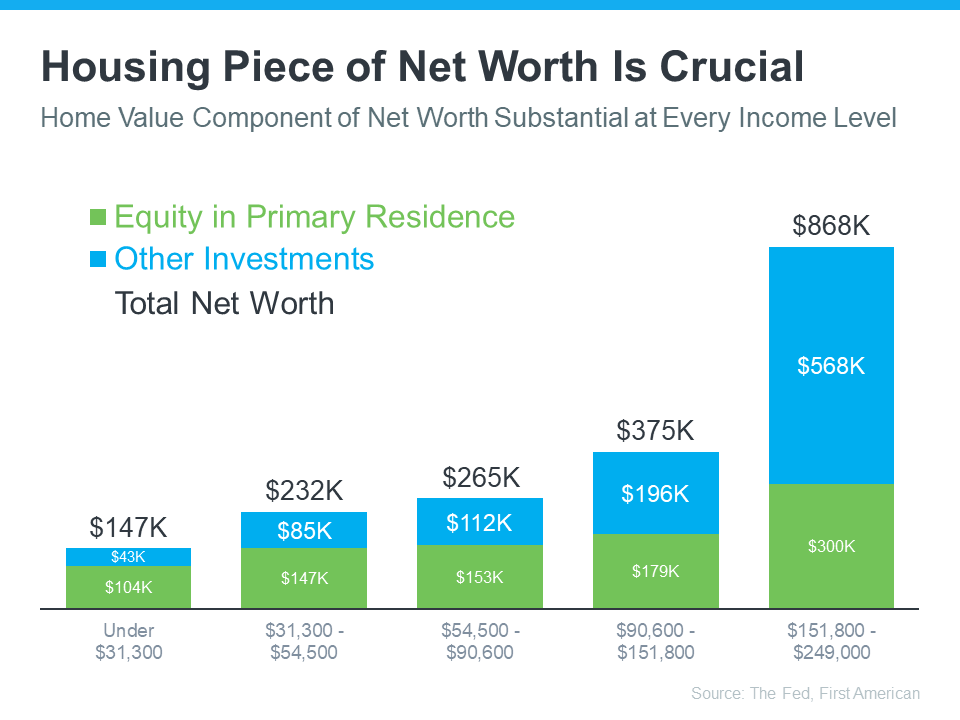
The green segment in each bar represents how much of a homeowner's net worth comes from their home equity. Based on this data, it's clear no matter what your income level is, owning a home can really boost your wealth. Nicole Bachaud, Senior Economist at Zillow, shares:
“The biggest asset most people are ever going to own is a home. Homeownership is really that financial key that helps unlock stability and wealth preservation across generations.”
If you’re ready to start building your net worth, the current real estate market offers several opportunities you should consider. For example, with mortgage rates trending lower lately, your purchasing power may be higher now than it has been in months. And, with more inventory coming to the market, there are more options for you to consider. A local real estate agent can walk you through the opportunities you have today and guide you through the process of finding your ideal home.
In Conclusion
If you're unsure about whether to rent or buy a home, keep in mind that owning a home can increase your overall wealth in the long run, no matter your income. To discover more about this and the many other benefits of homeownership, let’s connect.
