At Home with Team Gabriel

You’ll find our blog to be a wealth of information, covering everything from local market statistics and home values to community happenings. That’s because we care about the community and want to help you find your place in it. Please reach out if you have any questions at all. We’d love to talk with you!

April 23, 2024

What’s The Best Way To Buy a Home Before Selling?

What homeowners need to know about buying a home before selling.


Selling your current home before buying a new one is the conventional way to move. However, depending on your situation, there will be times when buying before you sell is the better option. Whatever your reason, you should know that buying first comes with additional risks, such as paying two mortgages, if your current home takes a long time to sell.


If you’re in a situation where you must buy first before selling, don’t worry. It’s not impossible, but it takes some strategic planning to make it happen. Here are three things that will help you buy before you sell:


1. Use a home equity line of credit. A home equity line of credit, or HELOC, is a second mortgage that allows you to borrow cash based on the value of your home. In other words, it allows you to use your equity without selling your home. While lenders vary on how much they’ll let you borrow, 85% of your equity is industry standard. If you choose this option, you’ll need to act fast. Getting approved for a HELOC often takes longer than a traditional mortgage approval, so you should have it in place before applying for the mortgage on your new home. Once you have moved into your new property, you can put your old one up for sale at your leisure and pay back your HELOC using the profits.


"You need to move fast in our competitive spring housing market."


2. Finance with a bridge loan. A bridge loan is a short-term, high-interest loan. When you buy with a bridge loan, you can use your existing home as collateral to get a loan for your new house. To close your bridge loan faster, try to align the closing dates of your buying and selling transactions.


3. Use a service that will help you make a cash offer. Companies like Knock and Homeward are revolutionizing the way people buy and sell homes. These types of companies offer game-changing home loan products that let you make competitive cash offers on your dream home before the sale of your current one and help you avoid paying two mortgages simultaneously.


Buying a new home before selling your existing one has its unique challenges, but if you can leverage the three options above and utilize the guidance of an experienced agent, you can come up with the best solutions for your situation. If you want more details about this topic or have any real estate concerns, don’t hesitate to call or email me. I’ll be happy to help.

April 19, 2024

Open House - 38 Aloha Drive, Enfield, CT

Posted in Open House
April 18, 2024

New Listing - 38 Aloha Drive, Enfield, CT

April 17, 2024

Is It Better To Rent Than Buy a Home Right Now?

You may have seen reports in the news recently saying it’s more affordable to rent right now than it is to buy a home. And while that may be true in some markets if you just look at typical monthly payments, there’s one thing that the numbers aren’t factoring in: and that’s home equity. Here’s a look at how big of an impact equity can have and why it’s worth considering as you make your decision.

What the Headlines Are Based on

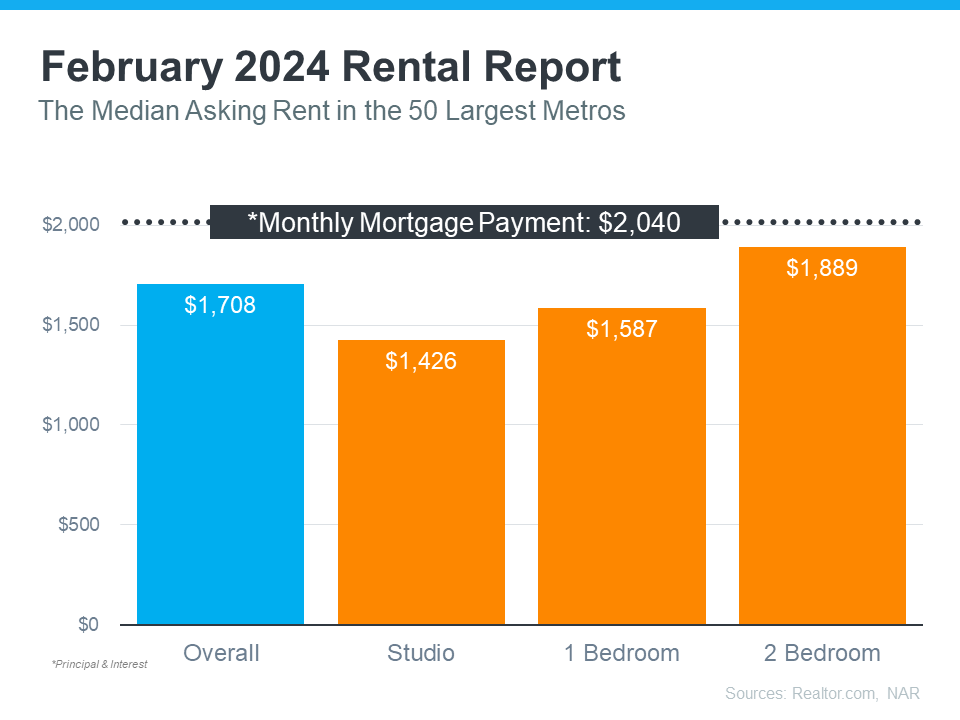
The graph below uses national data on the median rental payment from Realtor.com and median mortgage payment from the National Association of Realtors (NAR) to compare the two options. As the graph shows, especially if you’re not looking for a lot of space, it can be more affordable on a monthly basis to rent:

But if you’re looking for something with 2 bedrooms, the gap between the median rent and the median mortgage payment starts to shrink to a difference that may be more doable. The median monthly mortgage payment is $2,040. The median monthly rent for 2 bedrooms is $1,889. That’s a difference of about $151 a month. But here’s what happens when you factor in equity too.

How Equity Changes the Game

If you rent, your monthly rental payments only go toward covering your housing costs and your landlord’s expenses. So other than saving a bit more per month and maybe getting your rental deposit back when you move, the money you spent on housing each month is gone – forever.

When you buy, your monthly mortgage payment pays for your shelter, but it also acts as an investment. That investment grows in the form of equity as you make your mortgage payment each month and chip away at what you owe on your home loan. Your equity gets an extra boost as home values climb – which they typically do.

To give you a clearer idea of how equity can really stack up fast, here’s some data for you. Each quarter, Fannie Mae and Pulsenomics publish the results of the Home Price Expectations Survey (HPES). It asks more than 100 economists, real estate professionals, and investment and market strategists what they think will happen with home prices. In the latest release, those experts say home prices are going to keep going up over the next five years.

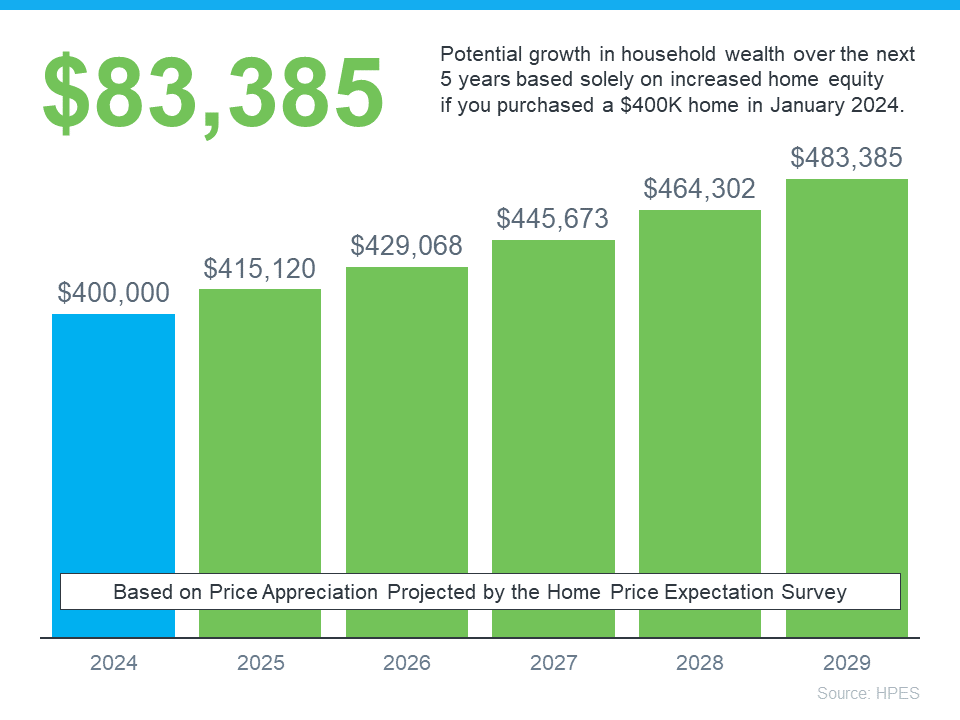
Here's an example of how equity builds based on the projections from the HPES (see graph below):

Imagine you purchased a home for $400,000 at the start of this year. Chances are, since you bought, you plan to stay put for a while. Based on the HPES projections, if you live there for 5 years, you could end up gaining over $83,000 in household wealth as your home grows in value.

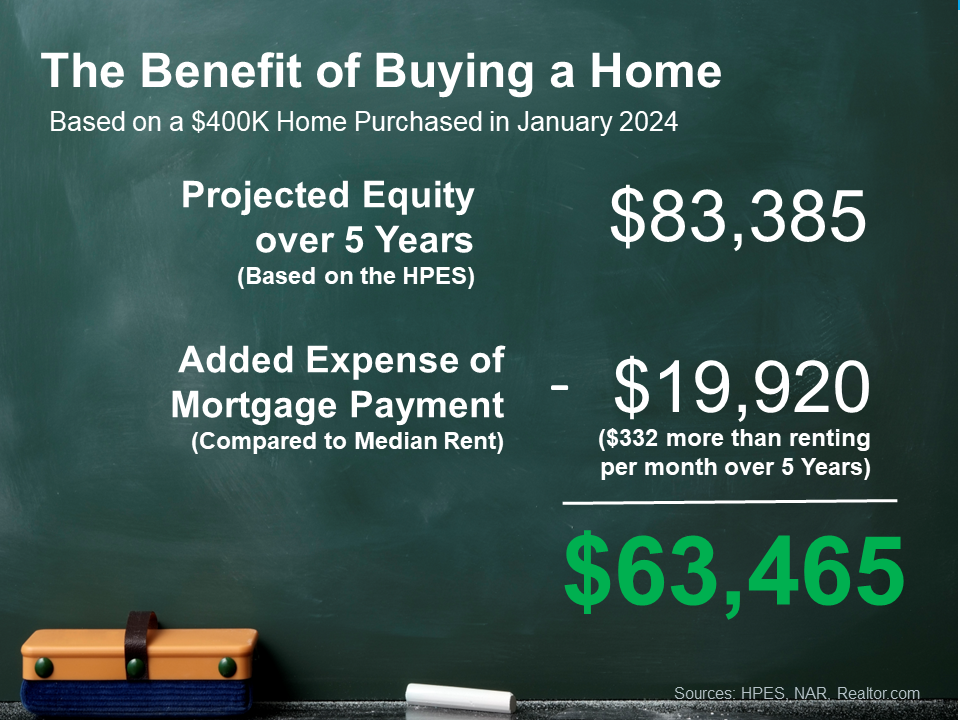
Here’s how that stacks up compared to renting, using the overall median rent from above:

While you may save a bit on your monthly payments if you rent right now, you’ll also miss out on gaining equity.

So, what’s the big takeaway? Whether it makes more sense to rent or buy is going to vary based on your personal finances. It’s not a good idea to buy if the numbers truly don’t work for you. But, if you’re ready and able, adding equity as the final puzzle piece may be enough to help you realize buying is a better move in the long run.

In Conclusion

When it comes down to it, buying a home gives you a benefit renting just can’t provide – and that’s the chance to gain equity. If you want to take advantage of long-term home price appreciation, let’s go over your options.

Posted in Buyers, Rent vs Buy
April 16, 2024

First Look - 38 Aloha Drive, Enfield, CT

Posted in First Look
April 15, 2024

Celebrating Success with Team Gabriel

Posted in Video Clips
April 10, 2024

Should I Move with Today’s Mortgage Rates?

When mortgage rates spiked up over the last few years, some homeowners put their plans to move on pause. Maybe you did too because you didn’t want to sell and take on a higher mortgage rate for your next home. But is that still the right strategy for you?

In today’s market, data shows more homeowners are getting used to where rates are and thinking it may be time to move. As Mark Zandi, Chief Economist at Moody’s Analytics, explains:

“Listings are up a bit as life events and job changes are putting increasing pressure on locked-in homeowners to sell their homes. Homeowners may also be slowly coming to the realization that mortgage rates aren’t going back anywhere near the rate on their existing mortgage.

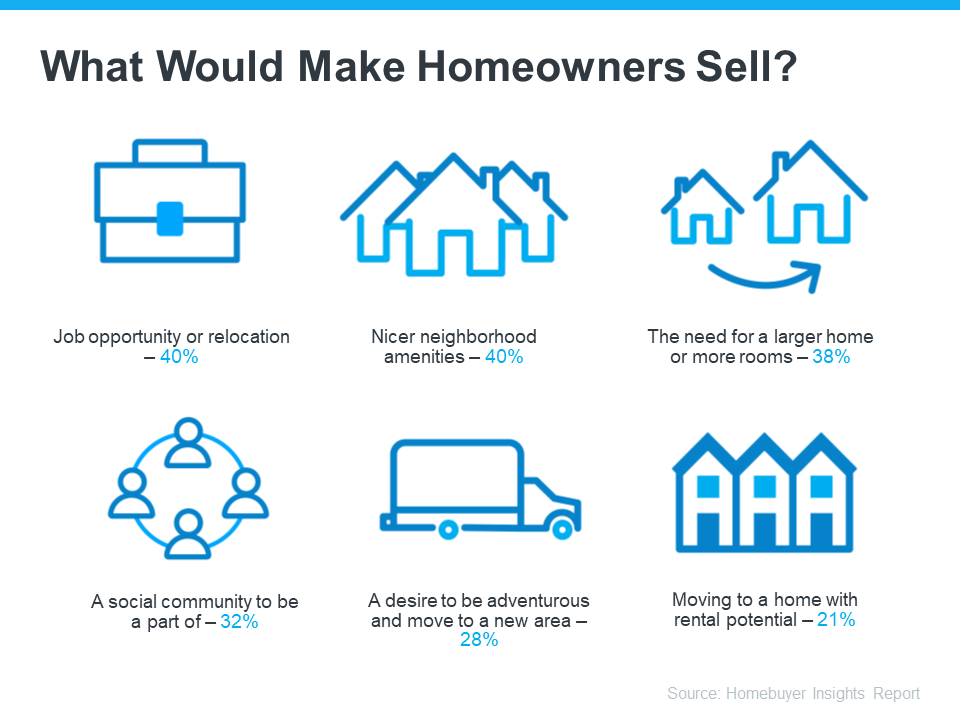
A recent study from Bank of America sheds light on some of the things homeowners say would make them sell, even with rates where they are right now (see visual below):

What Would Motivate You To Move?

Now that you know why other people would move, take a minute to think about what would make a move worth it for you. Is it time to take a chance and go for your dream job, even though it’s not local? Are you looking for a neighborhood that has more to offer and a close-knit sense of community? Maybe you just need more space, you’re looking for your next great adventure, or you want a house that opens up rental opportunities to pad your income.

And here’s something else to consider. Mortgage rates are still expected to go down over the course of the year. And once that happens, there’s going to be a big rush of buyers jumping back into the market. While you could delay your plans until rates drop, you’ll only have more competition with those buyers if you do.

So, does that mean it’s worth it to move now, even with rates where they are? The answer is: that it depends.

You'll want to consider today’s mortgage rates, where they’re expected to go from here, and what would prompt you to want to make a change as you decide on your next steps. An expert can help with that. 

In Conclusion

Other homeowners are getting used to rates and deciding to move. Let’s chat to go over what matters most to you and if it’s time for you to jump back into the market too. 

Posted in Interest Rates, Sellers
April 9, 2024

The Top 5 Reasons You Need a Real Estate Agent when Buying a Home

You may have heard headlines in the news lately about agents in the real estate industry and discussions about their commissions. And if you’re following along, it can be pretty confusing. But here’s the thing you really need to know – expert advice from a trusted real estate agent is priceless, now more than ever. And here’s why.

A real estate agent does a lot more than you may realize.

Your agent is the person who will guide you through every step when buying a home and look out for your best interests along the way. They smooth out a complex process and take away the bulk of the stress of what’s likely your largest purchase ever. And that’s exactly what you want and deserve.

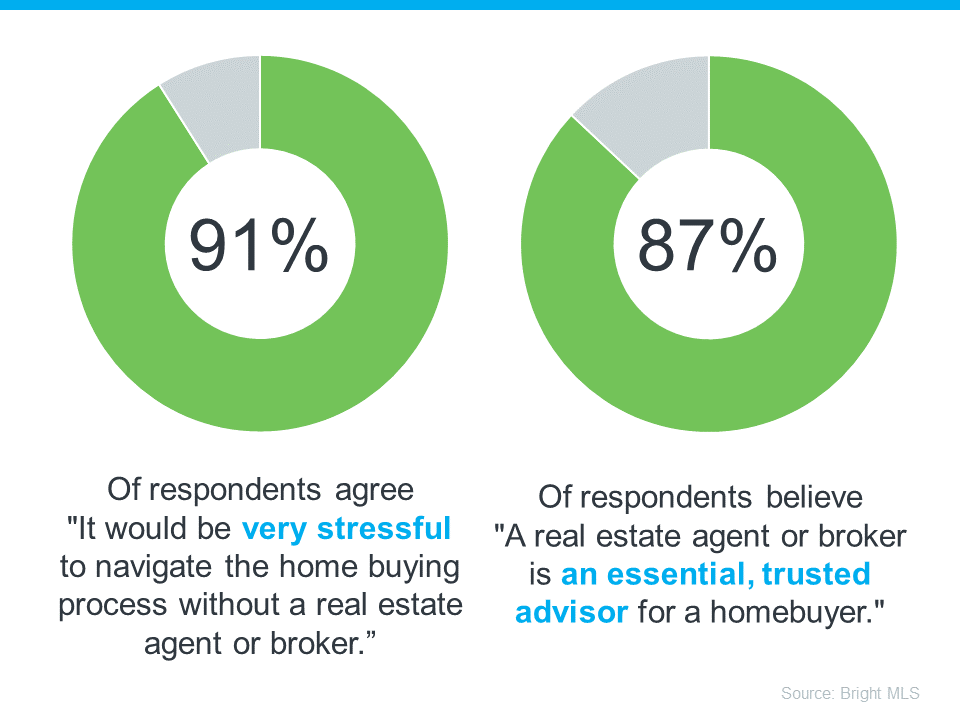
This is at least a part of the reason why a recent survey from Bright MLS found an overwhelming majority of people agree an agent is a key part of the homebuying process (see visual below):

To give you a better idea of just a few of the top ways agents add value, check out this list.

1. Deliver Industry Experience

The right agent – the professional – will coach you through everything from start to finish. With professional training and expertise, agents know the ins and outs of the buying process. And in today’s complex market, the way real estate transactions are executed is constantly changing, so having the best advice on your side is essential.

2. Provide Expert Local Knowledge

In a world that’s powered by data, a great agent can clarify what it all means, separate fact from fiction, and help you understand how current market trends apply to your unique search. From how quickly homes are selling to the latest listings you don’t want to miss, they can explain what’s happening in your specific local market so you can make a confident decision.

3. Explain Pricing and Market Value

Agents help you understand the latest pricing trends in your area. What’s a home valued at in your market? What should you think about when you’re making an offer? Is this a house that might have issues you can’t see on the surface? No one wants to overpay, so having an expert who really gets true market value for individual neighborhoods is priceless. An offer that’s both fair and competitive in today’s housing market is essential, and a local expert knows how to help you hit the mark.

4. Review Contracts and Fine Print

In a fast-moving and heavily regulated process, agents help you make sense of the necessary disclosures and documents, so you know what you’re signing. Having a professional that’s trained to explain the details could make or break your transaction, and is certainly something you don’t want to try to figure out on your own.

5. Bring Negotiation Expertise

From offer to counteroffer and inspection to closing, there are a lot of stakeholders involved in a real estate transaction. Having someone on your side who knows you and the process makes a world of difference. An agent will advocate for you as they work with each party. It’s a big deal, and you need a partner at every turn to land the best possible outcome.

In Conclusion

Real estate agents are specialists, educators, and negotiators. They adjust to market changes and keep you informed. And keep in mind, every time you make a big decision in your life, especially a financial one, you need an expert on your side.

Expert advice from a trusted professional is priceless. Let’s connect today.


Posted in Buyers
April 8, 2024

Don’t Let Your Student Loans Delay Your Homeownership Plans

If you have student loans and want to buy a home, you might have questions about how your debt affects your plans. Do you have to wait until you’ve paid off those loans before you can buy your first home? Or is it possible you could still qualify for a home loan even with that debt? Here’s a look at the latest information so you have the answers you need.

A Bankrate article explains:

"Roughly 60 percent of U.S. adults who have held student loan debt have put off making important financial decisions due to that debt . . . For Gen Z and millennial borrowers alone, that number rises to 70 percent.”

This includes one of the biggest financial decisions you’ll ever make, buying a home. But you should know, even with student loans, waiting to buy a home may not be necessary. While everyone’s situation is unique, your goal may be more within your reach than you realize. Here’s why. 

Can You Qualify for a Home Loan if You Have Student Loans?

According to an annual report from the National Association of Realtors (NAR), 38% of first-time buyers had student loan debt and the typical amount was $30,000.

That means other people in a similar situation were able to qualify for and buy a home even though they also had student loans. And you may be able to do the same, especially if you have a steady source of income. As an article from Bankrate says:

“. . . you can have student loans and a mortgage at the same time. . . . If you have student loans and want a mortgage, there are multiple home loan programs you might qualify for . . .”

The key takeaway is, for many people, homeownership is achievable even with student loans. 

You don’t have to figure this out on your own. The best way to make a decision about your goals and next steps is to talk to the professionals. A trusted lender can walk you through your options based on your situation, and share what’s worked for other buyers.

In Conclusion

Lots of other people with student loan debt are able to buy their own homes. Talk to a lender to go over your options and see how close you are to reaching your goal.

Posted in Buyers
April 7, 2024

3 Ways To Discover What Your Home Is Really Worth

Three useful strategies to help you determine your home’s value.


Whether you're considering selling, refinancing, or simply curious about your property's value, understanding how to determine your home's worth is crucial. Today, we'll explore three essential strategies to help you unveil the mystery behind your home's market value.


1. Research comparable sales (comps). Analyze recently sold properties in your neighborhood that are similar to yours in terms of size, features, and condition. Look for properties that have sold within the last six months. They provide the most accurate reflection of the current market. Pay close attention to factors such as square footage, number of bedrooms and bathrooms, and overall condition. Adjust the value of your home based on any significant differences. Take into account the proximity to amenities, schools, and public transportation.


"Determining your home's worth is a crucial step."


2. Get a professional appraisal. While researching comps can give you a good estimate, a professional appraisal provides an authoritative and impartial assessment of your home's value. Appraisers consider various factors, including the property's condition, recent improvements, and the overall real estate market. Clean, organize, and address any necessary repairs before the appraisal to present your property in the best light. Inform the appraiser of any recent renovations or improvements that might positively impact your home's value.


3. Utilize online valuation tools. Various online tools and platforms like Zillow can provide quick and convenient estimates of your home's worth. While these tools may not replace the accuracy of a professional appraisal, they can serve as a useful starting point. Different online tools may provide varying estimates due to differences in algorithms and data sources, so consult multiple platforms. For a more accurate online estimate, use our valuation tool here.


By using these strategies, you can gain a comprehensive understanding of your home's market value. Armed with this knowledge, you'll be better equipped to make informed decisions regarding your property. If you have any questions, don’t hesitate to reach out by phone or email.

Posted in Expert Advice, Sellers