Home Search
At Home with Team Gabriel
You’ll find our blog to be a wealth of information, covering everything from local market statistics and home values to community happenings. That’s because we care about the community and want to help you find your place in it. Please reach out if you have any questions at all. We’d love to talk with you!
The Real Benefits of Buying a Home This Year

Have you been wondering whether you should keep renting or finally make the leap into homeownership? It’s a big decision, and let’s be real — renting can feel like the easier option, especially if buying a home feels out of reach.
But here’s the thing: a recent report from Bank of America highlights that 70% of prospective buyers fear the long-term consequences of renting, including not building equity and dealing with rising rents.
Maybe you’re feeling that too — concerned about where renting might leave you down the road, but still unsure if you'd even be able to buy right now. The truth is, if you’re able to make the numbers work, buying a home has powerful long-term financial benefits.
Let’s break down why homeownership is worth considering in 2025 and beyond, and how it can help set you up for the future.
Buying Builds Wealth Over Time
Buying a home allows you to turn your monthly housing costs into a long-term investment. That’s because, as shown in data from the Census and the Department of Housing and Urban Development (HUD), home prices tend to increase over time (see graph below):
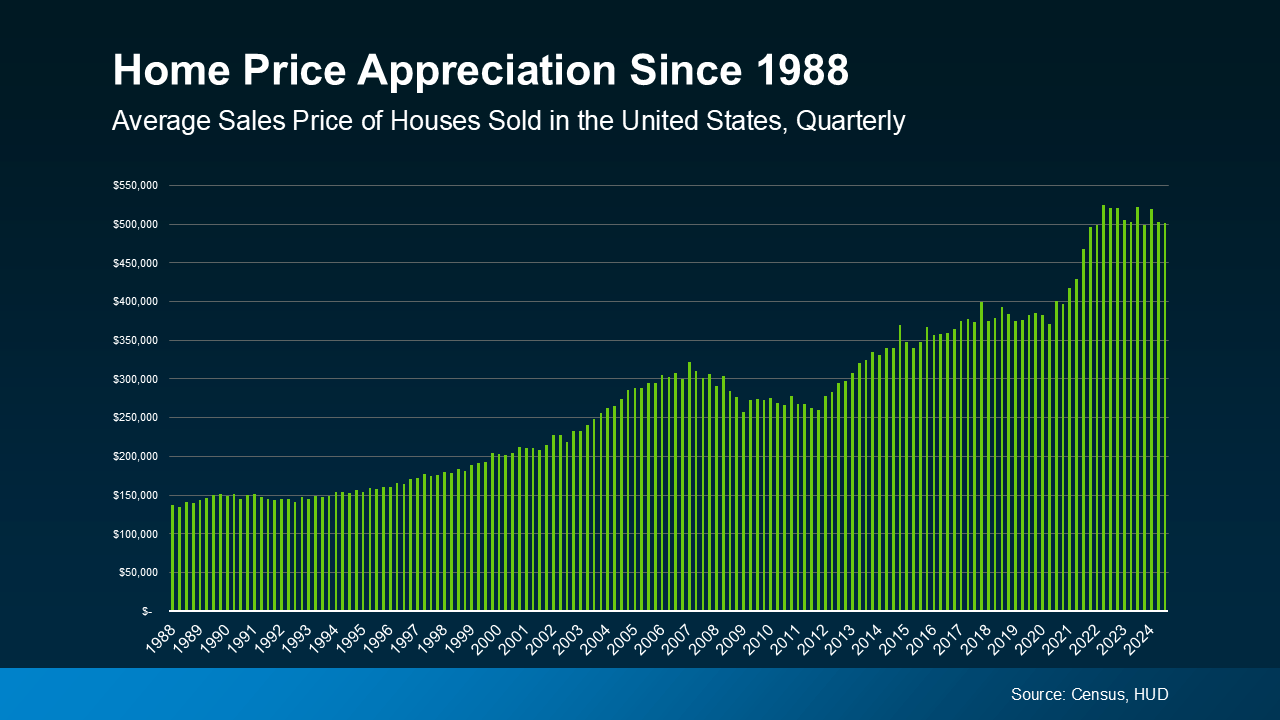
Rising home prices directly benefit homeowners. That’s because when you own a home, you build equity — meaning your ownership stake in your home grows as you pay down your mortgage and your home's value appreciates. And that, in turn, makes your net worth grow too.
Maybe that’s why, according to the National Association of Realtors (NAR), 79% of buyers believe owning a home is a good financial investment.
Renting Comes with Rising Costs
Renting may feel more affordable in the short term, especially right now with today’s home prices and mortgage rates. But the reality is, over time, rent almost always goes up too. Take a look at the data and you can see that play out. According to Census data, rents have significantly increased over the decades (see graph below):
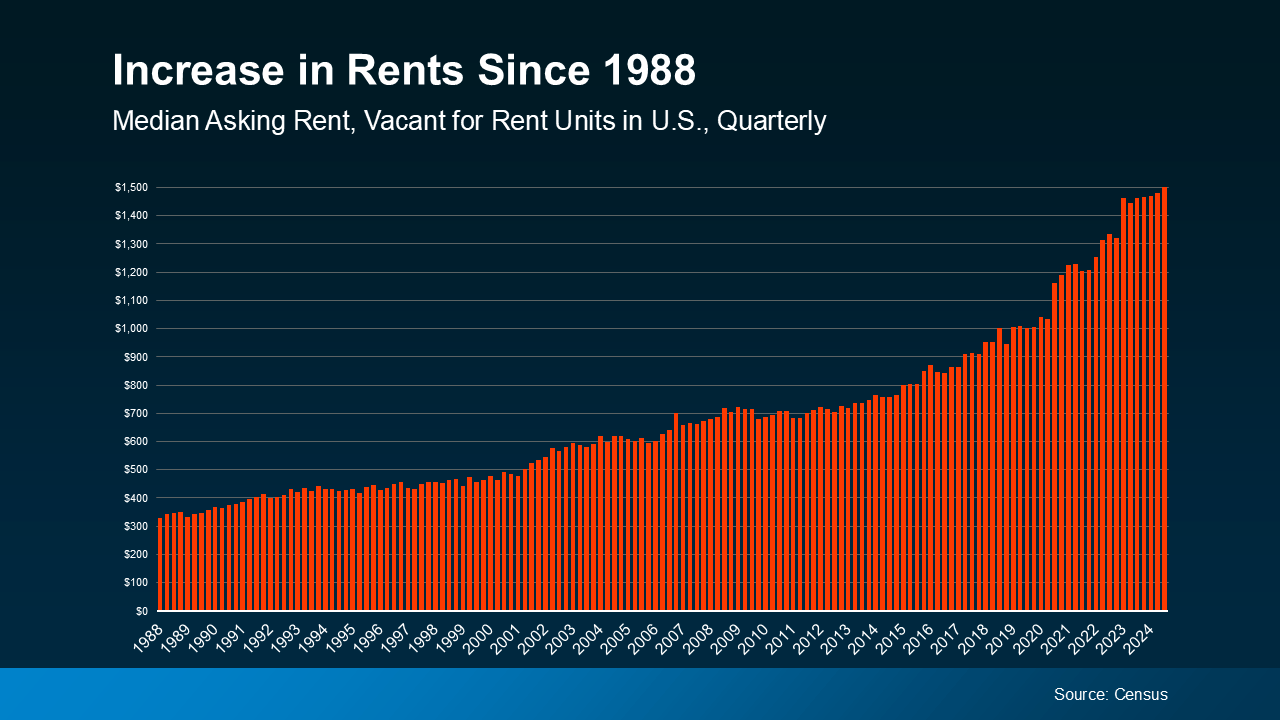
This means if you decide to rent, you’ll likely face growing expenses each time you renew or sign a new lease – and that’ll happen without building any wealth in return. Plus, those rising costs may make it harder to save up to buy a home down the road.
Renting vs. Buying: The Long-Term Impact
When you own a home, your payments are an investment in your future. Renting, on the other hand, means your money is gone for good — it helps your landlord build equity, not you.
Renting works for those not ready (or able) to buy today. But if you are able to make the numbers work, buying a home builds equity and sets you up for long-term financial success. So, even though renting may seem easier now, it can’t match the benefits of homeownership.
In Conclusion
If you can afford it, take control of your financial future by making homeownership part of your plan. It’s an investment you won’t regret.
Do you want to see what starter homes are available in our market? Let’s connect today to explore your options.
The Secret To Selling? Using an Agent To Get Your House Noticed

In a recent survey, the National Association of Realtors (NAR) asked sellers what they want most from a real estate agent. The number one answer was to help market their house.
It makes sense. The way your agent markets your house can be the difference between whether or not it stands out and gets attention from buyers. That’s why it’s so important to work with an expert local agent that knows what they're doing.
According to that same report from NAR, here are some of the most common methods real estate agents use to market homes, and how you benefit when your agent uses them effectively (see graph below):
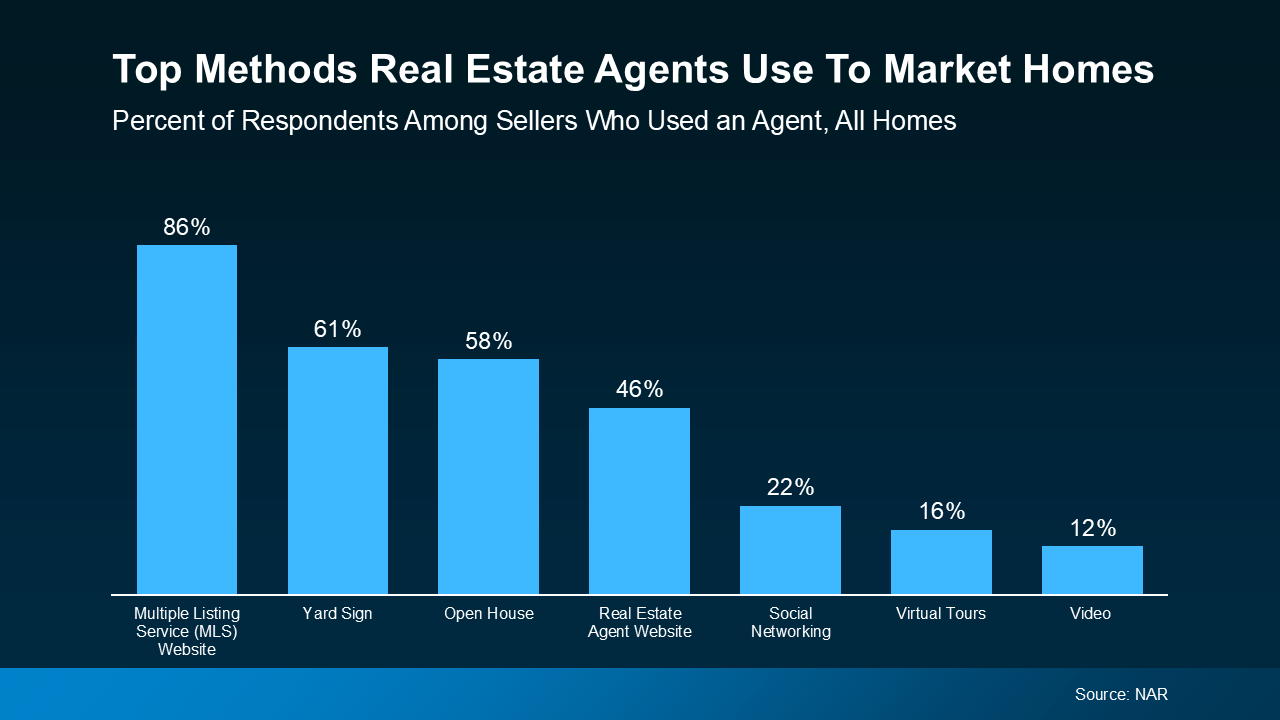
- Listing on the MLS – Real estate agents have access to the Multiple Listing Service (MLS) database. And that’s great for you because having your house on the MLS helps it get more visibility from other agents and buyers. And the more people who see it, the more likely it is to sell.
- Using a Yard Sign – A yard sign may seem simple, but it’s one of the best ways to catch the attention of people driving or walking by. And when it does, they’ll help spread the word to friends and family who are looking to buy that there’s a house for sale in the area. It also puts your agent’s contact information on display, making it easy for interested buyers to get in touch.
- Having an Open House – An open house is a great way to create a sense of competition and urgency among buyers – and that can lead to stronger offers. And since you’ll only need to leave once for many buyers to visit, it makes the process easier for you, too. Plus, an open house helps your agent get real-time feedback about what buyers love and what they're not as sold on.
- Showcasing on Your Agent’s Website – Having your house on your agent’s website presents it in a professional way to buyers. And odds are, people visiting your agent’s website are serious and ready to make a move, so this is a smart way to get in front of motivated buyers.
- Social Networking – Posting your house on social helps get your house in front of buyers who may not have seen it with traditional marketing. It also makes it easy for people to share your listing with friends and loved ones.
- Providing Virtual Tours – For buyers who are relocating from out of town, virtual tours allow them to check out your house anytime from wherever they are. This helps reach more potential buyers who may not be able to come to see your house in person.
- Using Video – Video is an excellent way for your agent to show off some of the top features of your house like your kitchen, large closets, outdoor entertainment areas, and other key details that could attract buyers.
- Sending Emails – Sending out information about your house to your agent’s expansive database is another way they’ll get it in front of even more people. Great agents may even send emails teasing that your house is coming to the market as a way to boost interest and excitement before it officially has an open house.
Here’s what it comes down to. Most good agents will write a description of your house for the listing and pair it with high-quality photos. But a great agent will do so much more than that.
They’ll not only lean on their expertise, they’ll put in the time and effort to make sure your house makes an impression on buyers, and ultimately, sells.
In Conclusion
As a seller, working with a creative local real estate agent is a smart way to ensure your house grabs the attention of the right buyers. If you’re ready to sell and want to talk about strategies we can use to get your house sold, let’s chat.
Two Resources That Can Help You Buy a Home Right Now
A recent report from Realtor.com says 20% of Americans don’t think homeownership is achievable. Maybe you feel the same way. With inflation driving up day-to-day expenses, saving enough to buy your first home is more of a challenge. But here’s the thing. With the right resources and help, you can still make it happen.
There are options that can help make buying a home possible today — even if your savings are limited or your credit isn’t perfect. Let’s explore just two of the solutions that could help get you into your first home no matter the market.
1. FHA Loans
If your down payment savings and your credit score aren’t where you want them to be, an FHA loan could be your pathway to buying a home. According to the U.S. Department of Housing and Urban Development (HUD) and Bankrate, the big perks of an FHA home loan are:
- Lower Down Payments: They typically require a smaller down payment than conventional loans, sometimes as low as 3.5% of the home’s purchase price.
- Lower Credit Score Requirements: They’re designed to help buyers with credit scores that might not qualify for conventional financing. This means, when conventional loans aren’t an option, you may still be able to get an FHA loan.
The first step is to connect with a lender who can help you explore your options and determine if you qualify.
2. Homeownership Assistance Programs
And if you need a more budget-friendly down payment, that’s not your only option. Did you know there are over 2,000 homeownership assistance programs available across the U.S. according to Down Payment Resource? And more than 75% of these programs are designed to help buyers with their down payment. Here’s a bit more information about why these could be such powerful tools for you:
- Financial Support: The average benefit for buyers who qualify for down payment assistance is $17,000. And that’s not a small number.
- Stackable Benefits: To make it even better, in some cases, you may be able to qualify for multiple programs at once, giving your down payment an even bigger boost.
Rob Chrane, CEO of Down Payment Resource confirms a little-known fact:
“Some of these programs can be layered. And so, in other words, you may not be limited to just one program.”
If you want to learn more or see what you qualify for, be sure to lean on the pros. A trusted real estate agent and a lender can guide you through the process, explain the help that’s out there, and connect you with resources to make buying a home a reality.
In Conclusion
If you’re ready to stop wondering if buying a home is possible and start exploring solutions, let’s connect.
When Is the Perfect Time To Move?

It’s easy to get caught up in the idea of waiting for the perfect moment to make your move – especially in today’s market. Maybe you’re holding out and hoping mortgage rates will drop, or that home prices will fall. But here’s what you need to realize: trying to time the market rarely works. And here’s why.
There is no perfect market.
No matter when you buy, there’s always some benefit and some sort of trade-off – and that’s not a bad thing. That’s just the reality of it. If you’re not sure you buy into that, think back to the last 5 years in housing.
Just a few years ago, mortgage rates hit a historic low. To take advantage of that, a ton of buyers rushed to buy a home and lock in those lower rates. The side effect? With such a big increase in how many buyers were purchasing, the homes on the market were snapped up fast. And since that resulted in so few homes left for sale, bidding wars became the norm and home prices went through the roof. Those buyers got a great rate, but they had other things to contend with.
Now, with higher rates and higher prices, it’s more expensive to buy. You can’t argue that. But at the same time, the number of homes for sale is at the highest point in several years. That means you have more options to choose from and you’ll be less likely to find yourself in a pull-out-all-the-stops bidding war. Again, there are benefits and trade-offs in any market.
So, if you have a reason to move and can afford to do so, you’ve got to take advantage of the trends that work in your favor and lean on a pro to help you navigate the rest. As Bankrate says:
“The complexities of the current conditions mean that, now more than ever, it’s smart to lean on the guidance of an experienced local real estate agent. If you want to enter the housing market in 2025, whether as a buyer or a seller, let a pro lead the way for you.”
While achieving your goals may feel like an uphill battle in today’s complex market, it is doable. But you’ll need the help of a trusted real estate agent and a lender.
Your agent will help you explore creative solutions – like looking into different housing types (like smaller condos), considering homes that need a little elbow grease, or casting a wider net for your search area. And your lender will walk you through different loan options and down payment assistance programs, so you know what you need to do to make the numbers work for you. As Yahoo Finance says:
“Buying a house at a time when both mortgage rates and home prices are favorable is a challenge. You probably shouldn’t try to time the housing market . . . Buy when it makes sense for you personally.”
In Conclusion
There’s no perfect time to move – every market has its pros and cons. The key is knowing how to make the most of the factors working in your favor. If you need to move and can afford to do it, let’s connect so you’ll have the guidance and tools to make it possible.
One Homebuying Step You Don’t Want To Skip: Pre-Approval

There’s one essential step in the homebuying process you may not know a whole lot about and that’s pre-approval. Here’s a rundown of what it is and why it’s so important right now.
What Is Pre-Approval?
Pre-approval is like getting a green light from a lender. It lets you know how much they’re willing to let you borrow for a home. To determine that number, a lender looks at your financial history. According to Realtor.com, these are some of the documents a lender may ask you for during this process:
- W-2s from the last two years
- Tax returns from the last two years
- Pay stubs from the last 30 days
- Bank statements from the last 60 days
- Investment account statements (if applicable)
- Two years of history of where you’ve lived
The result? You’ll get a pre-approval letter showing what you can borrow. Keep in mind, that any changes in your finances can affect your pre-approval status. So, after you receive your letter, avoid switching jobs, applying for new credit cards or other loans, or taking out large sums of money from your savings.
How It Helps You Determine Your Borrowing Power
This year, home prices are expected to rise in most places and mortgage rates are still showing some volatility. So, since affordability is still tight, it’s a good idea to talk to a lender about your home loan options and how today’s changing mortgage rates will impact your future monthly payment.
The pre-approval process is the perfect time for that. Because it determines the maximum amount you can borrow, pre-approval also helps you figure out your budget. You should use this information to tailor your home search to what you’re actually comfortable with as far as a monthly mortgage payment. That way, you don’t fall in love with a house that’s out of your comfort zone.
How It Helps You Stand Out
Once you find a home you want to put an offer on, pre-approval has another big perk. It not only makes your offer stronger, it shows sellers you’ve already undergone a credit and financial check.
When a seller sees you as a serious buyer, they may be more attracted to your offer because it seems more likely to go through. As Greg McBride, Chief Financial Analyst at Bankrate, says:
“Preapproval carries more weight because it means lenders have actually done more than a cursory review of your credit and your finances, but have instead reviewed your pay stubs, tax returns and bank statements. A preapproval means you’ve cleared the hurdles necessary to be approved for a mortgage up to a certain dollar amount.”
In Conclusion
If you’re planning on buying a home, getting pre-approved for a mortgage should be one of the first things on your to-do list. Not only will it give you a better understanding of your borrowing power, it can put you in the best position possible to make a strong offer when you find a home you love. Connect with a trusted lender to learn more.
Roughly 11,000 Homes Will Sell Today – Will Yours Be One of Them?

Are you hesitant to sell your house because you’re worried no one’s buying with rates and prices where they are right now? Here’s some perspective that can help.
The market actually isn’t at a standstill. While there weren’t as many sales last year as there’d be in a normal market, roughly 4.15 million homes still sold (not including new construction), according to the National Association of Realtors (NAR). And the expectation is that number will rise in 2025. That means more people will likely move this year, and they need homes to buy. Homes like yours.
But even if we only match last year’s sales pace, here’s what that looks like.
Every Minute Homes Are Selling – Literally
- 4.15 million homes ÷ 365 days in a year = 11,370 homes sell each day
- 11,370 homes ÷ 24 hours in a day = 474 homes sell per hour
- 474 homes ÷ 60 minutes = roughly 8 homes sell every minute
Think about that. Just in the time it took you to read this, 8 homes sold.
If you’ve been holding off on selling your house because you think buyers aren’t out there, let this reassure you – there are still buyers looking to buy.
Every day, thousands of people need to buy homes. So, while higher home prices and mortgage rates have slowed the market down and forced some buyers onto the sidelines, that doesn’t mean the market isn’t active. Many buyers are still eager to make a move because life doesn’t wait for perfect market conditions.
With the right agent by your side, you can get your house in front of those buyers while other hesitant homeowners are still putting their plans on pause because they’re worried buyer demand has disappeared. Let’s get your house sold.
In Conclusion
On average, over 11,000 homes sell every day, and yours could be one of them. In the time it took you to read this, another 8 homes sold.
When you’re ready to take the next step, let’s connect so you have an agent to create that perfect strategy.
The Truth About Credit Scores and Buying a Home

Your credit score plays a big role in the homebuying process. It’s one of the key factors lenders look at to determine which loan options you qualify for and what your terms might be. But there’s a myth about credit scores that may be holding some buyers back.
The Myth: You Need To Have Perfect Credit
According to Fannie Mae, only 32% of potential homebuyers have a good idea of what credit score lenders actually require.
That means two-thirds of buyers don’t actually know what lenders are looking for – and most overestimate the minimum credit score needed.
The Reality: Perfect Isn’t Necessary
But the truth is, you don’t need perfect credit to become a homeowner. To see the average score, by loan type, for recent homebuyers check out the graph below:

There is no set cut-off score across the board. As FICO explains:
“While many lenders use credit scores like FICO Scores to help them make lending decisions, each lender has its own strategy, including the level of risk it finds acceptable. There is no single “cutoff score” used by all lenders, and there are many additional factors that lenders may use . . .”
So, even if your credit score isn’t as high as you’d like, you may still be able to get a home loan. Just know that, even though you don’t need perfect credit to buy a home, your score can have an impact on your loan options and the terms you’re able to get.
Work with a trusted lender who can walk you through what you’d qualify for.
Simple Tips To Improve Your Credit Score
If you want to open up your options a bit more after talking to a lender, here are a few tips from Experian and Freddie Mac that can help give your score a boost:
1. Pay Your Bills on Time
This includes everything from credit cards to utilities and other monthly payments. A track record of on-time payments shows lenders you’re responsible and reliable.
2. Pay Down Outstanding Debt
Reducing your overall debt not only improves your credit utilization ratio (how much credit you’re using compared to your total limit) but also makes you a lower-risk borrower in the eyes of lenders. That makes them more likely to approve a loan with better terms.
3. Hold Off on Applying for New Credit
While opening new credit accounts might seem like a quick way to boost your score, too many applications in a short period can have the opposite effect. Focus on improving your existing accounts instead.
In Conclusion
Your credit score doesn’t have to be perfect to qualify for a home loan. The best way to know where you stand? Work with a trusted lender to explore your options.
